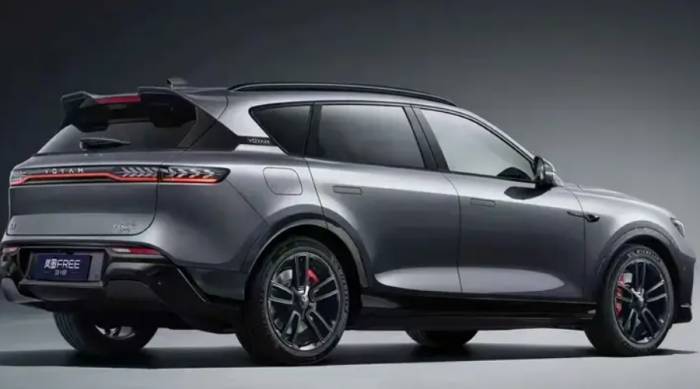
Let's cut straight to the point. Kaiyi cars are made in China. The Kaiyi (凯翼) brand is a Chinese automotive marque. But if you think that answer is too simple, you're right. The real story is more interesting than just a country of origin label. It involves corporate strategy, technological alliances, and a brand trying to carve its own path in the hyper-competitive world of Chinese auto manufacturing.
I've followed the Chinese auto industry for over a decade, and Kaiyi's journey is a classic case study. Many people see the badge and assume it's just another generic Chinese brand. That's a mistake. Understanding where Kaiyi comes from tells you a lot about its technology, its quality aspirations, and who it's really competing with.
What's Inside This Guide
Kaiyi Cars: The Story of a Chinese Automotive Brand
Kaiyi Auto was officially launched in 2014. Its birthplace is Yibin, in Sichuan province, China. But to understand its DNA, you need to look at its parents.
The Chery Connection and the Sichuan Move
Kaiyi wasn't born in a vacuum. It was originally established as a joint venture between Chery Automobile (a major Chinese state-owned automaker), the Yibin municipal government, and a private company. For the first few years, Kaiyi heavily relied on Chery's platforms and technology. Their early models, like the Kaiyi X3, were essentially re-styled versions of Chery cars.
This is a common strategy in China – a parent company creates a sub-brand to target a slightly different market segment. In 2018, things shifted. Chery reduced its stake, and Yibin City Construction Investment Group and Wuhu-based construction firm became the major shareholders. The company's headquarters and production were moved to Yibin, Sichuan. This move was strategic, tying the brand's future to local government support and the growing industrial base in Western China.
Technology Partnerships: More Than Just a Chinese Car
This is where the "which country" question gets layered. While the brand and manufacturing are Chinese, Kaiyi's technology pool is international. They've been smart about partnerships.
Their most significant tie-up is with CATL (Contemporary Amperex Technology Co. Limited), the world's largest battery manufacturer, also based in China. For their electric vehicles (EVs), this is a huge credibility boost. Using CATL's battery tech means they're sourcing from the same supplier as Tesla, BMW, and many other global giants.
They've also collaborated with Huawei for intelligent cockpit solutions and connectivity features in some models. This pattern shows Kaiyi's strategy: leverage best-in-class Chinese tech suppliers to compete on features, even if the brand itself is younger.
Design Language and Target Market
Walk around a recent Kaiyi model like the Kaiyi Tanggu or the Kunlun. You'll notice they're trying hard to shed the "Chery clone" image. The designs are more angular, aggressive, and try to follow global SUV trends. They're targeting young, first-time car buyers in China's tier 2 and tier 3 cities – buyers who want a lot of tech, space, and style for their money.
From my observation at auto shows, the fit and finish on newer models is a step above their earliest offerings. There's still a gap compared to established global brands, but the gap is closing faster than many critics expect.
Where Are Kaiyi Cars Sold and Manufactured?
Let's get concrete. Knowing the country of origin is one thing, but where are these cars actually built and who can buy them?
Primary Manufacturing Base
The main production hub for Kaiyi vehicles is in Yibin, Sichuan Province, China. This is a modern facility that was part of the strategic move to establish the brand's independence. If you buy a Kaiyi car today, especially one of their newer models, it most likely rolled off the assembly line here.
Some of their earlier models, developed during the closer Chery era, may have been produced in Chery's plants in Wuhu, Anhui province. But the current and future production is centered in Yibin.
Current Markets: Mostly Domestic with Emerging Exports
Kaiyi's primary market is, unsurprisingly, China. Their sales network covers hundreds of dealerships across the country. They are not a major volume player like Chery or Geely, but they have a niche.
On the export front, Kaiyi has started making moves. They have begun exporting vehicles to markets like Russia, the Middle East, and some South American countries. These are typical first-step export markets for many Chinese brands, where price competitiveness and feature-rich offerings are key.
As of now, Kaiyi cars are not officially sold in North America, Western Europe, Australia, or the UK. If you see one outside of the markets mentioned, it's likely a parallel import or a very small-scale trial.
| Kaiyi Model | Primary Type | Key Technology Partner | Target Market |
|---|---|---|---|
| Kaiyi Tanggu | Compact SUV (ICE/PHEV) | CATL (for PHEV battery) | Young urban families in China |
| Kaiyi Kunlun | Mid-size SUV (PHEV/EV) | Huawei (intelligent cockpit) | Tech-savvy buyers in China & export |
| Kaiyi X3 Pro | Subcompact SUV (ICE) | Chery-derived platform | Budget-first buyers in smaller cities |
Kaiyi Car Quality and Reliability: An Owner's Perspective
This is the million-dollar question for any car buyer. "It's Chinese" isn't a quality rating. Having driven a few and spoken to owners, here's a less black-and-white view.
The quality trajectory is upward. Their earliest cars had issues – inconsistent panel gaps, cheap-feeling interior plastics, and occasional electrical gremlins. These were common growing pains for many Chinese brands 5-10 years ago.
The newer generation (post-2021 models like the Tanggu) feels more solid. The doors close with a better thunk, the interior uses softer-touch materials in key areas, and the infotainment systems are more responsive. They are packing their cars with features: panoramic sunroofs, digital instrument clusters, ADAS systems – things that cost far more in other brands.
But there's a catch, a nuance often missed. The reliability of the complex tech features, especially the Huawei-derived infotainment and driver aids, is still being proven over the long term. A common piece of advice I give: the simpler the Kaiyi model (like an X3 with a basic engine and manual transmission), the more likely it is to be trouble-free, as it uses more proven, older Chery-derived mechanicals. The more advanced, feature-packed PHEV models are more impressive but carry a higher potential for complex system issues down the line.
Warranty and after-sales service are crucial. In China, they offer competitive warranties (often 3-5 years/100,000+ km). In export markets, this network is thinner. Always check the local service support before considering an import.
Your Questions on Kaiyi Cars Answered
So, which country made Kaiyi cars? China, through and through. But it's a China that's rapidly evolving, leveraging global supply chains and homegrown tech giants to build cars that are slowly changing the game. Kaiyi represents a specific slice of that evolution – not the premium leader, not the volume king, but the ambitious challenger trying to win you over with specs and value. Whether that's enough depends entirely on what you prioritize behind the wheel.