Let's cut to the chase. You're here because you've seen the GWM Tank 500—that bold, boxy SUV making waves—and you want to know if the specs on paper translate to a vehicle you'd actually want to own. Is it a genuine luxury off-roader, or just another wannabe? I've spent years driving everything from old Land Cruisers to the latest tech-loaded SUVs, and I'll tell you straight: the Tank 500 is one of the most intriguing propositions to hit the market in a while. It's not perfect, but it gets a lot right where it counts.
What You'll Find in This Review
- First Impressions: Design & Stance
- Under the Hood: Engine & Performance Specs
- The Off-Road Toolkit: Capability & Tech
- Inside the Cabin: Luxury & Technology
- On the Road: Driving Experience & Fuel Economy
- How It Stacks Up: Tank 500 vs. Key Rivals
- Buying Advice: Price, Trim & Who It's For
- Your Tank 500 Questions Answered
First Impressions: Design & Stance
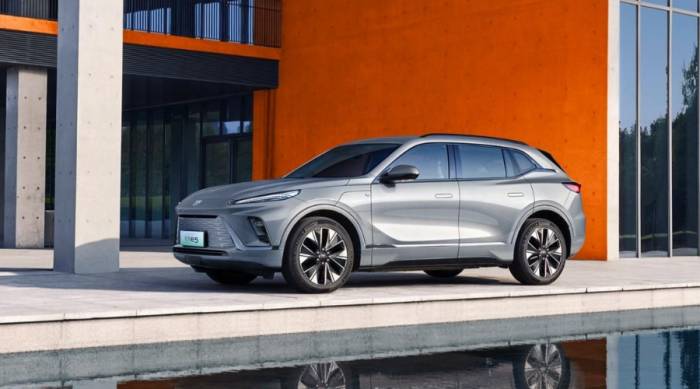
The Tank 500 doesn't whisper. It announces itself with a massive chrome grille and a squared-off silhouette that borrows cues from legendary off-roaders but adds its own modern twist. Some love the audacity; others find it a bit too much. I'm in the former camp—it has presence. The build quality, from the panel gaps to the paint, feels solid, a step above what you might expect at its price point.
Where the design really works is in its proportions. The approach and departure angles are competitive, and the ground clearance is substantial. You're not buying this to be invisible.
Under the Hood: Engine & Performance Specs
This is where the GWM Tank 500 specs sheet gets interesting. You typically get two powertrain options, and they cater to different needs.
The Hybrid Powertrain: Power with a Side of Efficiency
The headline act is often the hybrid system. It combines a turbocharged 2.0-liter petrol engine with an electric motor. The total system output is seriously impressive on paper—often quoted around 245 kW and 615 Nm of torque. That's sports sedan numbers in a body-on-frame SUV. The electric motor gives you that instant, silent shove from a standstill, making it feel deceptively quick around town.
But here's a non-consensus point everyone glosses over: the character of this power. It's smooth and strong, but it doesn't have the low-end grunt feel of a big, naturally aspirated V8 or even a turbo-diesel. The power delivery is more refined and linear. For towing or slow, technical off-roading, that's something to be aware of.
The Diesel Option: The Torque King
For the traditionalists and long-distance tourers, the 2.4-liter turbo-diesel is the pick. With around 135 kW and 480 Nm, it's all about that torque curve. It pulls strongly from low revs, which is exactly what you want when climbing a steep grade or navigating a rocky track. The diesel rumble is present but well-insulated.
The Off-Road Toolkit: Capability & Tech
Specs are meaningless if they don't work off the pavement. The Tank 500 is built on a robust ladder frame and comes with a proper part-time 4WD system with a low-range transfer case. That's the bedrock.
Where it gets clever is the tech layered on top. You get multiple terrain modes (Mud, Sand, Rock, etc.) that adjust throttle, transmission, and traction control settings. The crawl control function is excellent for steep, slippery descents—set a speed and let the computer handle the brakes.
One feature I found genuinely useful was the transparent bonnet view via the 360-degree camera. When cresting a steep hill or placing your wheels on rocks, seeing "through" the front of the car is a game-changer for precision.
The locking rear differential is standard on higher trims. It's a must-have for serious off-roading. The suspension travel is good, though not class-leading. I took it on a moderately tough trail, and it soaked up ruts and rocks without breaking a sweat. It inspires confidence.
Inside the Cabin: Luxury & Technology
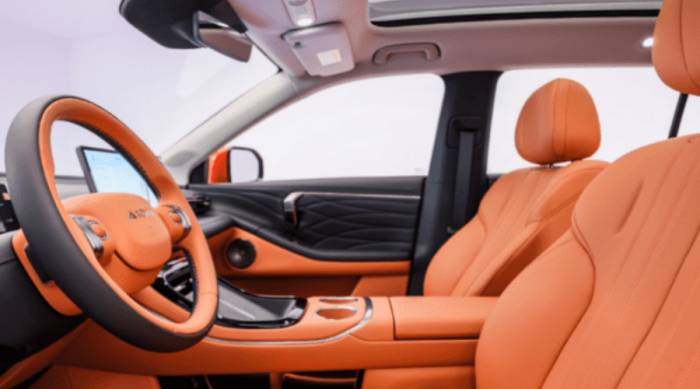
Open the door, and the "luxury" part of "luxury off-roader" hits you. This is a major differentiator. You're greeted with soft-touch materials, wood trim (real or convincing), and metal accents. The seats are plush and supportive, even on long drives.
The tech suite is overwhelming at first. A large central touchscreen dominates the dashboard, controlling everything from navigation to the off-road modes. A digital instrument cluster sits behind the wheel. The graphics are sharp, and the menus are logically laid out after a short learning curve.
Practicality is strong. The second-row space is enormous, with reclining seats. The third row, however, is best for children or short trips—a common compromise in this segment. Cargo space with all seats up is minimal, but fold them flat, and you have a van-like area.
| Interior & Tech Highlights | Details & Notes |
|---|---|
| Infotainment Screen | 14.6-inch touchscreen, responsive, wireless Apple CarPlay/Android Auto. |
| Digital Cluster | 12.3-inch display, customizable, shows off-road angles and tyre pressure. |
| Sound System | Premium brand audio (often Infinity), 10+ speakers, quality is very good for the class. |
| Seating & Space | Leather upholstery, ventilated/heated front seats, massive legroom in row two. |
| Practical Features | Wireless charging, multiple USB ports, panoramic sunroof, rear window blinds. |
On the Road: Driving Experience & Fuel Economy
How does a 2.5-tonne brick-shaped vehicle drive? Surprisingly well. The hybrid is eerily quiet at low speeds. On the highway, there's some wind noise from the big mirrors and upright screen, but it's not offensive. The ride quality is where it shines—the suspension is tuned for comfort, absorbing bumps with a plush, isolated feel. It's a great long-distance cruiser.
Handling is what you'd expect: safe, predictable, and with noticeable body roll in corners. You don't buy this for canyon carving.
Now, the elephant in the room: fuel consumption. This is a major user pain point. Official figures are optimistic, as always.
- Hybrid: You might see around 9-10L/100km in careful mixed driving. In heavy city traffic using the electric motor, it can dip lower. On a sustained highway run at 110 km/h, expect 10-11L/100km. It's good for its size, but don't expect Prius numbers.
- Diesel: This is more consistent. You can realistically achieve 8.5-9.5L/100km on a highway trip, maybe 10-11L/100km in combined driving. It's the more frugal choice for open-road adventures.
How It Stacks Up: Tank 500 vs. Key Rivals
Let's be real, most cross-shop the Tank 500 with the Toyota Land Cruiser Prado or the Ford Everest.
Against the Toyota Prado, the Tank 500 wins on interior luxury, standard tech, and outright power (especially the hybrid). It feels a generation newer inside. The Prado fights back with a legendary reputation for reliability, stronger resale value, and a more proven, simplistic drivetrain. The Prado feels more utilitarian; the Tank 500 feels more luxurious.
Against the Ford Everest, it's a closer tech fight. The Everest has a brilliant diesel engine and sharp dynamics. The Tank 500 counters with a more opulent cabin and the unique hybrid option. The Everest might be the better driver's car on-road, while the Tank 500 pampers its occupants more.
The Tank 500's value proposition is its killer feature. You get more kit for your money.
Buying Advice: Price, Trim & Who It's For
Pricing varies by market, but the Tank 500 typically undercuts its established rivals by a significant margin, even in top-spec guise. You're looking at a price that might match a mid-spec competitor, but you get the fully-loaded experience.
Trims usually start with a well-equipped base model and go up to a luxury-focused top trim (often called Ultra or Luxury). My advice? The mid-to-high trim is the sweet spot. It gets you the essential off-road hardware (rear diff lock, terrain modes) and the luxury interior features without going overboard.
The GWM Tank 500 is for the buyer who wants a capable, comfortable, and tech-loaded off-road SUV but doesn't want to pay the premium for a Toyota or Land Rover badge. It's for someone who values what's in the car today over long-term brand perception. If you plan to keep the car for 5-8 years and are dazzled by the features and space, it's a compelling choice. If resale value in 3 years is your top concern, you might hesitate.