Let's cut to the chase. If you're asking "which country made the Trumpchi car?", the direct answer is China. It's a brand born and bred there. But if you stop there, you're missing the whole story. That's like saying a Tesla is just an American car—technically true, but it ignores the revolution behind it. Trumpchi is the passenger vehicle division of GAC Group (Guangzhou Automobile Group Co., Ltd.), one of China's "Big Four" state-owned automakers. Its headquarters and primary manufacturing base are in Guangzhou, a megacity in southern China's Guangdong province. But the real intrigue isn't just the "where," it's the "how" and "why." How did a Chinese brand pick a name that sounds, to Western ears, so politically charged? And why should anyone outside China care about it now?
What You'll Discover Inside
- What is the Trumpchi Car Brand?
- Who Makes Trumpchi Cars? The GAC Group Story
- Where Are Trumpchi Cars Designed and Manufactured?
- Key Trumpchi Models and What They Offer
- The Big Question: Trumpchi's Quality and Reliability
- Trumpchi's Global Plans: Are They Coming to the US or Europe?
- What to Consider If You're Thinking About a Trumpchi
- Your Trumpchi Questions, Answered
What is the Trumpchi Car Brand?
Trumpchi (传祺 Chuán Qí in Mandarin) launched in 2010. The name is a portmanteau. "Chuan" means to transmit, inherit, or spread. "Qi" means prosperity, good fortune, or unusual talent. So, it's about "spreading uniqueness" or "inheriting excellence." It's a deeply Chinese name with positive connotations. The English spelling "Trumpchi" was likely chosen for its phonetic similarity and perhaps a touch of aspirational marketing (associating with "trump card"). Any resemblance to a certain former U.S. president is purely coincidental and chronologically impossible—the brand predates that political era.
From the start, GAC didn't position Trumpchi as a bargain-basement brand. The goal was to create a "premium Chinese brand." They invested heavily in design centers (initially with help from famed Italian design house Pininfarina), R&D, and building a modern supply chain. The first model, the GA5 sedan, was competent but unremarkable. The real shift happened around 2015-2017 when their design language coalesced into something genuinely attractive, led by models like the GS4 SUV and the GA8 flagship sedan.
Who Makes Trumpchi Cars? The GAC Group Story
To understand Trumpchi, you must understand its parent, GAC Group. Founded in 1955, it's a automotive giant. For decades, its bread and butter was successful joint ventures with global players. It builds and sells:
- GAC Toyota (Camry, Highlander, etc.)
- GAC Honda (Accord, Odyssey, etc.)
- GAC Mitsubishi
This is crucial. Working shoulder-to-shoulder with Toyota and Honda for decades gave GAC an unparalleled education in quality control, lean manufacturing, and supply chain management. It's a advantage most other Chinese brands didn't have in such depth. When GAC decided to launch its own brand, it wasn't starting from zero. It was starting with Toyota-level production discipline as its baseline. That's a massive head start.
Here's a perspective you won't often hear: Many analysts focus on Chinese EV startups like Nio or XPeng as the disruptors. But the real sleeping giant might be a state-backed entity like GAC. They have the manufacturing muscle, the cash flow from profitable joint ventures, and the patience to play a long game. They've been learning from the best for 30 years. Now they're applying those lessons to their own brand.
Where Are Trumpchi Cars Designed and Manufactured?
Trumpchi's heart is in Guangzhou. The primary R&D center and several advanced manufacturing plants are located there. These aren't old, low-tech factories. GAC's plants are modern, automated, and often benchmarked against global standards. They've even won awards for manufacturing excellence.
But the design influence is global. While the core engineering is in China, GAC has established international design studios. They had one in Los Angeles (though its status may have changed) and they actively recruit global talent. The aim is to create vehicles with a design language that appeals both domestically and, eventually, internationally.
They also source globally. Early Trumpchi models used engines from Alfa Romeo-derived technology (a legacy of a past partnership). Now, they develop their own engines and, critically, their own hybrid and electric powertrains under brands like GAC's "Magician" hybrid system.
Key Trumpchi Models and What They Offer
Trumpchi's lineup is SUV-heavy, reflecting market trends. Here are some of their core models that define the brand:
- GS4 / GS4 PLUS: The compact SUV that became a smash hit in China. It's their Corolla or CR-V—a reliable, good-looking, well-equipped family hauler that sells in huge numbers. It proved Trumpchi could compete in the heart of the market.
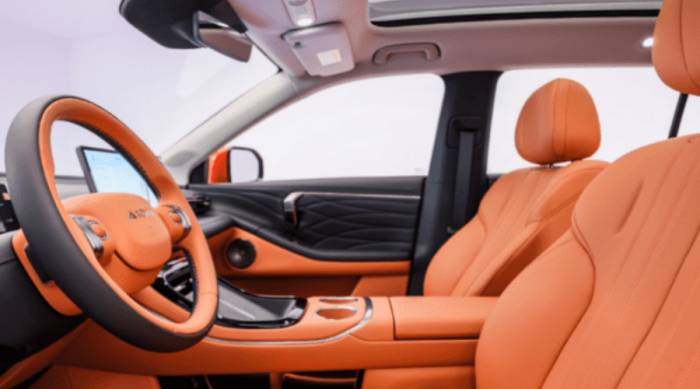
- GS8 / GS8 SUV: This mid-to-large-size SUV is the brand's flagship. The second-generation model, launched in 2022, is a head-turner. It features a bold grille, a spacious three-row interior, and offers a hybrid powertrain that... well, let's just say it shares some technological philosophy with Toyota's hybrid system (thanks to that joint venture knowledge). It's the model that makes people say, "Wait, that's a Chinese car?"
- M8 / M8 Master: A luxury MPV (minivan). In China, luxury MPVs are a big deal for business and family use. The M8 rivals the Toyota Alphard/Vellfire. It's lavishly equipped, often with captain's chairs, ottomans, and massive screens. It shows Trumpchi's push upmarket.
- Emkoo / Shadow: These are newer, more avant-garde models targeting younger buyers with sharper design and connected tech.
The Big Question: Trumpchi's Quality and Reliability
This is the elephant in the room. The legacy of early, poor-quality Chinese cars still haunts perceptions. So, where does Trumpchi stand?
The data suggests they are among the best of the Chinese brands. GAC Trumpchi has consistently ranked at or near the top of Chinese-brand quality surveys conducted by firms like J.D. Power in China. They've topped their "China Initial Quality Study (IQS)" multiple times, often beating some global brands. This isn't a fluke. It's the Toyota/Honda joint venture effect in action.
But—and this is a critical "but" from someone who's followed this industry—initial quality (problems in the first 90 days) is different from long-term reliability (problems over 5-10 years). GAC's joint venture experience suggests they understand durability testing, but Trumpchi as a brand is only 14 years old. The long-term data on how a 10-year-old Trumpchi holds up is still being written. The consensus among industry watchers is that they are likely the most reliable bet among major Chinese auto brands, but they still have to prove themselves over decades, not just years.
Here's a quick comparison of how Trumpchi stacks up against other notable Chinese brands on key perception points:
| Brand (Parent) | Known For | Perceived Quality/Reliability | Global Ambition |
|---|---|---|---|
| Trumpchi (GAC) | Conservative, Toyota-influenced engineering, strong initial quality. | Highest among traditional Chinese brands. | Steady, cautious expansion (Middle East, CIS, planning for Europe). |
| BYD | Battery & EV technology leader, vertical integration. | Improving rapidly, focus on EV powertrain reliability. | Very aggressive global push (Europe, SE Asia, LATAM). |
| Nio | Premium EVs, battery swapping, user community. | Good, but newer brand with less long-term track record. | Targeting premium markets in Europe. |
| Geely (owns Volvo, Lotus) | Acquisitions, leveraging Volvo tech (e.g., Lynk & Co). | Benefiting from Volvo safety/engineering input. | Already global via Volvo/Polestar, expanding own brands. |
Trumpchi's Global Plans: Are They Coming to the US or Europe?
Trumpchi is not sold in the United States. There are no official announcements for a US launch, and the regulatory, safety, and brand-building hurdles are enormous. The US market is a graveyard for foreign brands that underestimated it (think Peugeot, Fiat for decades).
Their global strategy has been more focused on emerging markets and, recently, Europe. They have a presence in countries across the Middle East, Southeast Asia, and the Commonwealth of Independent States (CIS).
The more likely vector for GAC's global expansion in Western markets might be under a different brand or through a new line of vehicles specifically designed for those markets. They have showcased concepts and talked about plans for Europe, likely starting with electric vehicles to meet strict emissions standards. Don't expect to see a Trumpchi GS8 at your local dealership next year. But in 5-8 years? It's a possibility, especially if they enter through a partnership or with a disruptive EV model.
What to Consider If You're Thinking About a Trumpchi
If you live in a country where Trumpchi is sold, here's the real-world advice:
Pros: You typically get more features, space, and technology for your money compared to a similarly priced Toyota, Honda, or Volkswagen. The fit and finish on recent models is impressive. The hybrid systems in models like the GS8 are efficient and smooth, directly benefiting from Japanese hybrid tech know-how. Dealer service in their home markets is often very attentive.
Cons: Residual values will almost certainly be lower than a Toyota or Honda. The brand cachet isn't there yet. While quality is good, the long-term (8+ year) durability of all components is still somewhat unproven. Software and infotainment, while feature-rich, can sometimes feel less polished than in established global brands.
My take? For a buyer who keeps cars for 5-7 years and values kit and space over brand prestige, a Trumpchi can be a smart, rational choice. For someone who wants to keep a car for 15 years and cares deeply about minimal depreciation, sticking with the established global leaders is still the safer bet.