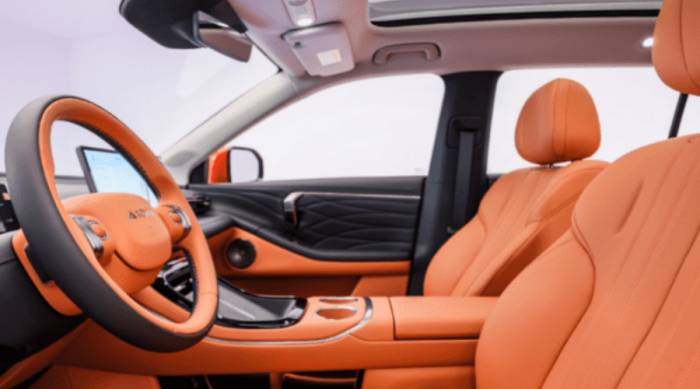
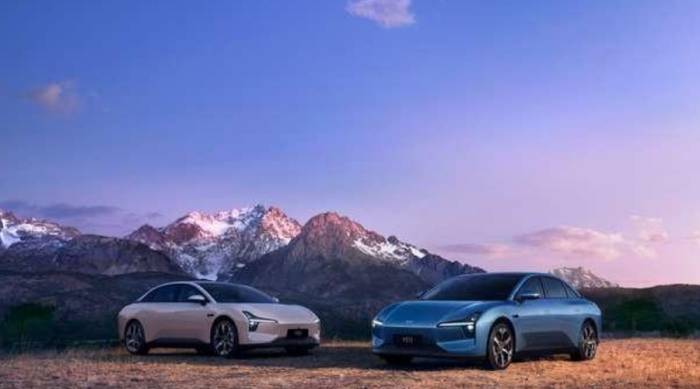
Let's cut straight to the point. Yes, Baic is unequivocally a Chinese car brand. More than that, it's a state-owned automotive giant whose full name, Beijing Automotive Industry Group Co., Ltd. (BAIC Group), hints at its deep roots and significant scale within China's industrial landscape. But if you're asking this question, you're likely looking for more than a simple yes or no. You probably want to know if Baic is any good, what it's known for, how it stacks up against other Chinese brands like Geely or BYD, and whether its cars are worth considering. This guide dives into all of that, moving beyond the basic fact to explore the brand's identity, its hits and misses, and its place in today's global car market.
What You'll Discover in This Guide
- From Military Trucks to Modern SUVs: Baic's Origins
- The Baic Family Tree: Understanding Its Sub-Brands
- Baic's Key Models: What Do They Actually Offer?
- Where in the World Can You Buy a Baic?
- How Baic Compares to Other Chinese Automakers
- Considering a Baic? Key Points for Potential Buyers
- Your Questions on Baic, Answered
From Military Trucks to Modern SUVs: Baic's Origins
Baic's story isn't one of a tech startup disrupting the industry. It's a story of industrial evolution. Founded in 1958, its early days were focused on producing vehicles for the military and for commercial use, like trucks and light-duty vehicles. This utilitarian beginning is crucial to understanding a part of its DNA that persists today: ruggedness and a focus on utility vehicles.
The real transformative period came in the early 2000s, as China's economy boomed and private car ownership exploded. Baic, like other state-owned enterprises, pivoted hard towards the passenger vehicle market. A major milestone was its 2009 acquisition of certain intellectual property rights from Saab, following the Swedish brand's bankruptcy. This gave Baic a valuable, if dated, technological foundation to build upon, particularly for its Senova sub-brand. It wasn't just about buying blueprints; it was a shortcut to engineering knowledge and a way to fast-track development.
Today, BAIC Group is one of China's "Big Four" state-owned automakers (alongside SAIC, FAW, and Dongfeng). It's a behemoth involved in everything from R&D and manufacturing to sales and financing. According to its corporate reporting and industry analyses from sources like the China Association of Automobile Manufacturers (CAAM), it consistently ranks among the top automotive groups in China by production volume.
The Baic Family Tree: Understanding Its Sub-Brands
This is where confusion often sets in. "Baic" isn't a single car model line; it's an umbrella group for several passenger vehicle brands, each with a different target. Think of it like Volkswagen Group, which oversees VW, Audi, and Skoda.
| Brand | Focus & Positioning | Key Model Example |
|---|---|---|
| BAIC Motor (Beijing Brand) | The core, volume-driven brand. Offers sedans, SUVs, and EVs at mainstream price points. | BAIC BJ40 (SUV), EU-Series (EV) |
| BAIC Senova | Initially positioned as a more premium, technology-focused brand leveraging Saab heritage. Its role has evolved and blurred over time. | Senova X55 (SUV) |
| BAIC Changhe | Historically focused on microvans and commercial vehicles. Now also produces affordable passenger crossovers. | Changhe Q7 (SUV) |
| BAIC Foton | The group's dedicated commercial vehicle arm (trucks, buses, vans). Not a passenger car brand. | Various Trucks & Vans |
| Joint Ventures | Critical to its business. BAIC has major manufacturing and sales JVs with Hyundai and Mercedes-Benz. Cars from these JVs (e.g., Beijing-Hyundai Tucson, Beijing-Mercedes-Benz C-Class) are vital for revenue but are not "Baic-branded" cars. | Beijing-Hyundai Elantra |
See the distinction? When you ask "Is Baic a Chinese car brand?", you're usually referring to the vehicles sold under the BAIC Motor, Senova, or Changhe badges.
Baic's Key Models: What Do They Actually Offer?
To move from corporate history to the showroom floor, let's look at two of Baic's most significant nameplates.
The BAIC BJ40: The Rugged Off-Roader
This is, without a doubt, Baic's most recognizable model globally. The BJ40 is a body-on-frame, hardcore SUV that wears its inspiration—the previous-generation Jeep Wrangler—on its sleeve. It's boxy, has removable doors and roof panels, and is built for rough terrain.
Who's it for? Buyers in markets where price-to-capability ratio is everything. It's popular in parts of Africa, the Middle East, and South America as a durable workhorse and adventure vehicle. In China, it has a cult following among off-roading enthusiasts who modify it extensively. It's not refined or fuel-efficient, but it's tough and relatively simple to repair.
The BAIC EU-Series: The Electric Contender
This represents Baic's push into electrification. The EU-Series, particularly models like the EU5 and EU7, are compact electric sedans that have been widely used in China's ride-hailing and taxi fleets. This fleet adoption speaks to their perceived durability and low operating cost.
The fleet focus is a double-edged sword. On one hand, high mileage in demanding use proves reliability in key areas like batteries and motors. On the other hand, it can stigmatize the model for private buyers who don't want a "taxi car." The interior materials and infotainment in earlier models were very basic, focused on cost-cutting for fleet sales—a common trap for Chinese brands moving into EVs.
Where in the World Can You Buy a Baic?
Baic's international strategy has been selective. Unlike Geely (which owns Volvo and Lotus) or SAIC's MG, which have made aggressive pushes into Europe and Australia, Baic has focused on developing markets and regions with less stringent regulatory hurdles.
Primary Export Markets: You'll find Baic-branded vehicles, especially the BJ40 SUV and various pick-up trucks, in countries like South Africa, Egypt, Iran, Vietnam, and several nations in Latin America. The value proposition here is clear: more features and size for the money compared to established Japanese or European brands.
Notable Absence: As of now, Baic does not have a significant retail presence in Western Europe, North America, or Japan. The barriers to entry (safety standards, emissions regulations, brand perception, and established competition) are extremely high. Their joint venture with Mercedes-Benz gives them insight into these markets, but selling their own brand there is a different challenge altogether.
How Baic Compares to Other Chinese Automakers
This is the real question for many car shoppers. Placing Baic on the spectrum helps.
- Vs. Geely/Volvo: Geely, through Volvo, has achieved a level of global design acclaim, safety technology, and brand polish that Baic hasn't matched. Geely's Lynk & Co. also shows a more modern approach to branding and digital integration.
- Vs. BYD: BYD has positioned itself as a vertical-integration powerhouse, especially in battery technology (Blade Battery). Its EV lineup is more comprehensive and technologically assertive than Baic's. Baic's EVs feel more like compliance or fleet-oriented products, while BYD's feel like flagship tech products.
- Vs. Great Wall (GWM): This is a closer comparison. Both have strong SUV-focused lineups (GWM with Haval, Baic with BJ series). Great Wall has been more aggressive and consistent in its global branding and model updates recently, with the Tank 300 becoming a global phenomenon similar to the BJ40.
Baic's strength has traditionally been in its manufacturing scale and government connections within China, rather than in being a trend-setting consumer brand. That's changing, but slowly.
Considering a Baic? Key Points for Potential Buyers
If you're in a market where Baic is sold, here's what you should weigh:
The Good: You typically get a lot of metal for your money. Features like large touchscreens, leather seats, and sunroofs often come standard at a low price point. Models like the BJ40 offer unique, rugged capability that's hard to find elsewhere in its price bracket. For fleet operators, their EVs can offer compelling total cost of ownership.
The Caveats (The "10-Year Expert" Advice):
Resale value is a major concern. These cars can depreciate rapidly. Do not buy one if you plan to sell it in 3-4 years; the financial hit will be severe.
Long-term reliability nuances: While major components may be fine, pay close attention to fit-and-finish, interior trim longevity, and electronic gremlins. A test drive isn't enough. Try to find online owner forums specific to your region and read about issues that crop up after 50,000 km.
Dealer and parts network: This is critical. How many service centers are there? Are parts readily available, or do you wait weeks for shipments? A cheap car becomes expensive if it's stuck in a shop. Research this more thoroughly than the car's brochure specs.
Your Questions on Baic, Answered
Is Baic owned by Mercedes-Benz?
No, Baic is not owned by Mercedes-Benz. They have a joint venture called Beijing Benz Automotive Co., Ltd. (BBAC). This is a partnership where they co-manufacture and sell Mercedes-Benz vehicles in China (like the long-wheelbase C-Class and E-Class). Daimler AG (Mercedes-Benz Group) also holds a minority stake in BAIC Motor. It's a deep partnership, but Baic remains a separate, state-influenced Chinese entity.
Are Baic cars safe and reliable for daily use?
Modern Baic models are designed to meet the safety regulations of the markets they are sold in. In China, they pass the C-NCAP tests. For reliability, it's a mixed bag. Their powertrains, often sourced from Mitsubishi or developed in-house with older, proven tech, can be durable. The bigger variables are the electronics, interior components, and overall assembly quality, which have shown inconsistency across models and model years. For daily use in a developing market, they can be adequate, but prioritize models with a long track record over brand-new launches.
Why do Baic cars look similar to other brands like Jeep or Mercedes?
class="item-answer">This was a common strategy for many Chinese automakers in their early growth phases—using "inspirational" designs to quickly gain market acceptance. The BJ40 and Jeep Wrangler is the most obvious example. While this helped with initial recognition, it also created a perception challenge. Baic and other brands are now investing heavily in original design to shed this image. Their newer electric concepts show more unique styling, but the legacy models still carry that resemblance.What is the future for Baic as a global brand?
Baic's future hinges on electrification and technology independence. Like all Chinese automakers, it's under government pressure to lead in EVs. Its partnership with Huawei in developing intelligent automotive solutions is a key move. The future likely involves a sharper split: continuing to produce rugged, affordable vehicles like the BJ40 for specific markets, while developing a new generation of smarter, more originally designed EVs under a potentially refreshed brand identity for more competitive markets. Success in Europe or North America remains a distant, uphill battle.