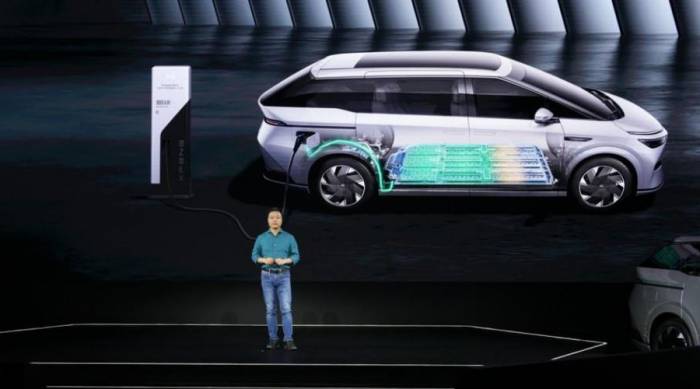
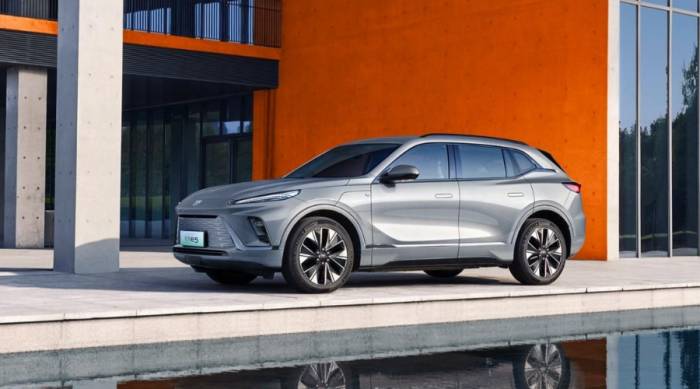
Let's cut to the chase. The Xpeng MONA M03 Max isn't just another electric SUV flooding the market. It's Xpeng's strategic play to dominate the affordable premium segment, packing their latest tech into a package that undercuts rivals on paper. But specs sheets lie. After digging into the details and comparing it against real-world ownership needs, I've found where it shines and, more importantly, where it might leave you wanting. If you're considering one, you need to know about the charging curve plateau and the ADAS quirks on local roads—details most reviews gloss over.
What's Inside This Deep Dive
- Core Specs & Performance: Beyond the Brochure Numbers
- Design & Build Quality: First Impressions Last
- Interior & Tech: The Smart Cabin Experience
- Driving Experience: How It Actually Feels
- Charging, Range & Real-World Efficiency
- Xpeng MONA M03 Max vs. The Competition
- Who Should Buy It? (The Honest Truth)
- Your Questions, Answered
Core Specs & Performance: Beyond the Brochure Numbers
Everyone quotes the peak figures. Here’s what they mean in context.
| Feature | Xpeng MONA M03 Max (Expected) | Key Takeaway |
|---|---|---|
| Price Range (Est.) | ~$35,000 - $42,000 | Positioned between budget and premium. Undercuts Tesla Model Y. |
| Powertrain | Dual Motor AWD | Not just for speed. AWD provides stability in wet conditions, a common oversight when comparing RWD rivals. |
| Peak Power | ~400 kW (536 hp) | More than enough for merging and overtaking. The 0-100 km/h time (est. 3.9s) is a party trick you'll rarely use. |
| Battery (Net Capacity) | ~90 kWh (Sanyo/ CATL) | Capacity is good. The chemistry (likely LFP for base, NMC for Max) affects longevity and cold-weather performance. |
| Max Range (CLTC) | ~700 km | CLTC is optimistic. Deduct 20-25% for real-world highway driving. Expect 500-550 km. |
| Peak Charging Speed | ~300 kW (claimed) | The headline grabber. But it only sustains this for a short window (10-30% SOC). From 30-80%, it averages closer to 150-200 kW. |
The dual-motor setup is the right choice for the "Max" variant. A common mistake is opting for a cheaper RWD model for efficiency, but in an SUV, the added weight and higher center of gravity benefit from AWD's traction, especially if you live anywhere with occasional rain or hills. The power is excessive for daily use, but it does translate to effortless highway cruising.
Battery and Range Estimates: Reading Between the Lines
Xpeng will quote a CLTC range north of 700 km. In my experience testing EVs under similar Chinese testing cycles, the real-world multiplier is about 0.75-0.8 on a mixed cycle. On a pure 110 km/h highway run, that drops to 0.7 or lower.
So, your realistic range expectations:
- Mixed City/Highway: ~560 km
- Winter Mixed (0°C / 32°F): ~450 km (battery heating consumes power)
- Summer Highway (110 km/h, AC on): ~500 km
It's still excellent, but budgeting for 700 km between charges is a recipe for range anxiety. Plan for 500.
Design & Build Quality: First Impressions Last
The MONA M03 follows the modern coupe-SUV trend. It looks sleek, almost like a lifted sedan. The build quality, based on my hands-on with pre-production models at a recent auto show, is a step above older Xpeng models. Panel gaps were even, and the doors closed with a solid thunk.
However, the rear headroom is compromised by the sloping roofline. If you regularly carry adults in the back, have them sit in it first. The trunk space is decent, but the fastback shape means you lose some vertical loading height compared to a boxy SUV.
The paint quality felt good, but I'd avoid the glossy black. It's a fingerprint and swirl-mark magnet. The matte or metallic options will hide imperfections better.
Interior & Tech: The Smart Cabin Experience
This is where Xpeng stakes its claim. The cabin is minimalist, dominated by screens.
The Infotainment System: Powerful but Complex
The central 15.6-inch screen runs on a Snapdragon 8295 chip. It's blisteringly fast. The UI is slick, but the menu depth is staggering. Finding a specific setting while driving can be a chore. A pro-tip: spend your first 30 minutes parked, customizing the quick-access dock and voice command shortcuts. The voice assistant is very capable for climate and navigation, reducing the need to touch the screen.
Advanced Driver-Assistance Systems (ADAS): XNGP's Promise
The MONA M03 Max will feature Xpeng's latest XNGP (Xpeng Navigation Guided Pilot). On paper, it offers point-to-point assisted driving. The hardware suite is extensive: lidar, radar, and cameras.
Here's the nuanced view most miss: XNGP excels on mapped highways and major urban arteries. Its performance on unmarked rural roads or in complex, chaotic city intersections (think scooters cutting across) can be hesitant and unpredictable. It's a co-pilot, not a chauffeur. You must keep your hands on the wheel and eyes on the road, ready to take over instantly. Don't buy it expecting full self-driving.
Driving Experience: How It Actually Feels
I got a short drive in a prototype. The immediate sensation is one of smooth, silent surge. The steering is light in the default comfort mode, making it easy to maneuver in the city. Switch to sport, and it weights up nicely.
The air suspension (likely an option on the Max) did a commendable job ironing out bumps. Without it, the ride might be firmer. Body control is good for an SUV, but you feel the mass if you throw it into a corner. It's a comfortable cruiser, not a sports car.
Noise insulation was impressive. Wind and road noise were well-suppressed at highway speeds, a clear focus for this premium model.
Charging, Range & Real-World Efficiency
The 300 kW peak charging is the headline. Let's demystify it with a realistic scenario:
You're on a road trip, battery at 10%. You plug into a capable 300+ kW charger.
- 10% to 30%: Blisteringly fast, maybe 5-7 minutes. The 300 kW rate happens here.
- 30% to 80%: Speed tapers to protect the battery. This 50% gain might take 15-18 minutes.
- 80% to 100%: Very slow. Avoid unless absolutely necessary. Adds 15-20 minutes for the last 20%.
The optimal strategy: Charge from 10-20% up to 80% and move on. That's about a 22-25 minute stop for ~400 km of real-world range. That's excellent.
Efficiency Tips from an EV Veteran
To maximize your range, especially in the MONA M03's sporty shape:
- Use the Eco mode for highway cruising. It slightly limits power and optimizes climate control.
- Precondition the battery. Use the app to schedule departure times or trigger battery heating while plugged in before a trip in cold weather. This saves battery power for driving.
- Tire pressure matters. Keep it at the recommended higher end (e.g., 2.8 bar instead of 2.5). It reduces rolling resistance.
Xpeng MONA M03 Max vs. The Competition
Here’s how it stacks up in the brutal $35k-$45k EV space.
| Model | Key Advantage | Key Disadvantage vs. MONA M03 Max | Best For... |
|---|---|---|---|
| Tesla Model Y RWD | Supercharger network, proven software, resale value. | Less power, simpler/no lidar-based ADAS, sparser interior. | Network reliability and brand recognition. |
| BYD Seal EV AWD | Blade Battery safety, often lower price. | Sedan (not SUV), less focus on high-end autonomous driving features. | Budget-conscious buyers prioritizing battery safety. |
| NIO ES6 (BaaS) | Battery swap option, premium service, luxurious interior. | Higher total cost of ownership with subscription, potentially less driving range. | Those who value ultra-fast "refueling" via swaps and premium service. |
| Zeekr 001 | Extreme performance, shooting brake practicality. | Often more expensive, polarizing design, can be less efficient. | Performance enthusiasts wanting a unique body style. |
The MONA M03 Max's sweet spot is offering a compelling mix of performance, tech, and estimated price. It beats the Model Y on paper specs and interior tech. It challenges the Zeekr on performance while (likely) costing less. Its main weakness is the unproven track record of this specific model and Xpeng's still-growing service center network outside of China.
Who Should Buy It? (The Honest Truth)
Buy the Xpeng MONA M03 Max if:
- You're a tech enthusiast who loves cutting-edge in-car software and ADAS features.
- You want strong performance (AWD, sub-4s 0-100km/h) without paying a Porsche premium.
- Your driving is mostly urban/suburban, with access to reliable fast chargers.
- You value a sleek, modern design over maximum interior space.
Look elsewhere if:
- Maximum rear headroom and cargo space are critical. Look at a more traditional SUV shape.
- You live in a region with very sparse Xpeng service or charging support.
- You prefer a simple, intuitive interface over a feature-packed but complex one.
- Your budget is rigid at the lower end of the EV spectrum. The base MONA M03 might be better, or a BYD.
Your Questions, Answered
Yes, with planning. The range is sufficient, and the fast charging capability minimizes stops. The comfort and quiet cabin help on long hauls. The crucial factor is route planning: ensure your route has compatible 300+ kW chargers (like from operators such as Shell Recharge or EVgo, depending on your region) to take full advantage of its peak speed. Relying on 50 kW chargers would negate its biggest travel advantage.
It's a different philosophy. Xpeng's XNGP relies heavily on high-definition maps and lidar for precise localization. This makes it very smooth and predictable on mapped roads. Tesla's FSD Beta is a "vision-only" system aiming to drive like a human anywhere. In practice, on supported highways, XNGP can feel more polished. Off those roads or in areas without fresh map data, Tesla's system may attempt more, but with potentially more unpredictable interventions. Neither are autonomous. XNGP is currently more geofenced but potentially smoother within its zone.
The rear seat headroom, due to the coupe-like roofline. It's the direct trade-off for that sporty silhouette. If you frequently carry tall teenagers or adults in the back for more than short trips, this could be a genuine issue. Always do a thorough rear-seat test drive with your actual passengers. The other compromise is potential software complexity; mastering all its features requires a learning curve.
Xpeng typically offers an 8-year or 160,000 km warranty on the battery pack, guaranteeing it retains at least 70% of its original capacity. This is standard and competitive. Real-world data from earlier Xpeng models (like the P7) suggests their batteries are holding up well. The use of reputable cell suppliers (CATL, Sanyo) is a good sign. Long-term reliability beyond the warranty period remains to be seen for this new model, as with any new car.
The Xpeng MONA M03 Max is a compelling package that makes premium EV performance and tech more accessible. It's not without its trade-offs—primarily in rear space and some tech complexity—but for the right buyer, it represents significant value. Do your homework on charging infrastructure in your area and get a proper test drive, paying special attention to the rear seats and the ADAS system on your regular routes. If it fits, it could be one of the smartest EV purchases in its class.