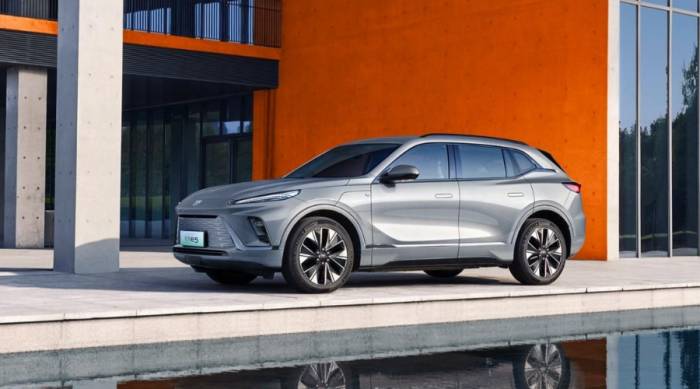
If you've seen the sleek Leapmotor C10 SUV or the cute T03 city car and wondered who's behind them, you're asking the right question. The simple answer is that Leapmotor cars are made by Zhejiang Leapmotor Technology Co., Ltd., a publicly traded Chinese electric vehicle manufacturer headquartered in Hangzhou. But that's just the surface. The real story is about a tech entrepreneur's vision, a vertically integrated strategy that's rare in the auto industry, and a bold global partnership that's shaking up the status quo. This isn't just another Chinese EV startup; it's a company built from the circuit board up.
What You'll Find in This Guide
- The Company Behind the Name: Zhejiang Leapmotor
- The Tech Founder's Vision: From Security Cameras to EVs
- The Leapmotor Vehicle Lineup: From City Car to Family SUV
- How Leapmotor Builds Cars: The Vertical Integration Edge
- The Stellantis Game-Changer: A Deal That Changes Everything
- Your Leapmotor Questions, Answered
The Company Behind the Name: Zhejiang Leapmotor
Leapmotor was founded in 2015, right in the middle of China's first big EV startup boom. While many competitors focused on flashy designs or marketing, Leapmotor's founding thesis was different: master the core technology. The company's full Chinese name, "零跑汽车" (Líng Pǎo Qìchē), translates to "Zero Run Automobile," hinting at a start-from-zero, running-fast philosophy.
They delivered their first vehicle, the S01 sports coupe, in 2019. It was a niche product that didn't set sales charts on fire, but it proved they could engineer and produce a car. The real breakthrough came with the 2020 launch of the Leapmotor T03, a micro EV that nailed the formula of decent range, modern features, and an ultra-competitive price. It became a hit, establishing Leapmotor as a serious player.
Today, the company is listed on the Hong Kong Stock Exchange (Stock Code: 9863.HK) and operates state-of-the-art manufacturing plants in places like Jinhua, Zhejiang Province. Their global headquarters and R&D center in Hangzhou is a hub for developing their in-house technologies.
The Tech Founder's Vision: From Security Cameras to EVs
To understand Leapmotor, you need to know its founder, Zhu Jiangming. This is where the story gets interesting. Zhu wasn't a car industry veteran. Before Leapmotor, he was the major founder and core technician of Dahua Technology, one of the world's largest manufacturers of video surveillance products.
Think about that. His expertise was in cameras, sensors, video processing chips, and AI algorithms. When he looked at a car, he didn't just see an engine and wheels; he saw a rolling data center packed with sensors. His founding idea was that the future of cars was electric, intelligent, and networked, and that expertise from the tech and IoT (Internet of Things) world would be decisive.
This background fundamentally shapes Leapmotor. It explains their heavy early investment in developing their own intelligent driving chips (like the Lingxin 01) and vehicle software platforms. While other startups were buying off-the-shelf solutions from suppliers like Bosch or Nvidia, Zhu wanted in-house control. This approach has pros and cons. It's costly and risky, but if it works, it leads to better integration, faster software updates, and potentially lower costs in the long run.
It's a bet that the car's "brain" is as important as its battery.
The Leapmotor Vehicle Lineup: From City Car to Family SUV
Leapmotor's current lineup is strategically focused on high-volume segments. They've moved past their niche S01 coupe and now target where most buyers actually shop.
| Model | Category | Key Selling Points | Starting Price (China, approx.) | Target Buyer |
|---|---|---|---|---|
| Leapmotor T03 | Micro / City EV | Ultra-affordable, ~280 km range, compact size for urban driving. | $9,000 USD | First-time car buyers, urban commuters, second family car. |
| Leapmotor C11 | Midsize SUV | Value flagship, long range (~550 km), spacious interior, high tech for price. | $22,000 USD | Tech-savvy families looking for premium features on a budget. |
| Leapmotor C01 | Sedan | Streamlined design, competitive range, tech-focused cabin. | $20,000 USD | Sedan lovers who want an electric alternative with modern tech. |
| Leapmotor C10 | Family SUV | Global model, built on new LEAP 3.0 architecture, focus on safety and family space. | $25,000 USD (est.) | International families, the core global SUV market. |
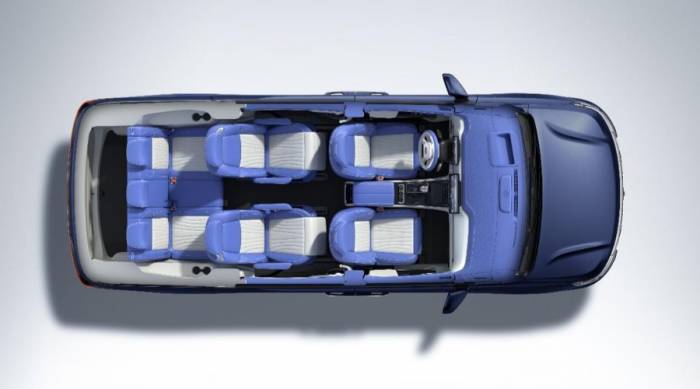
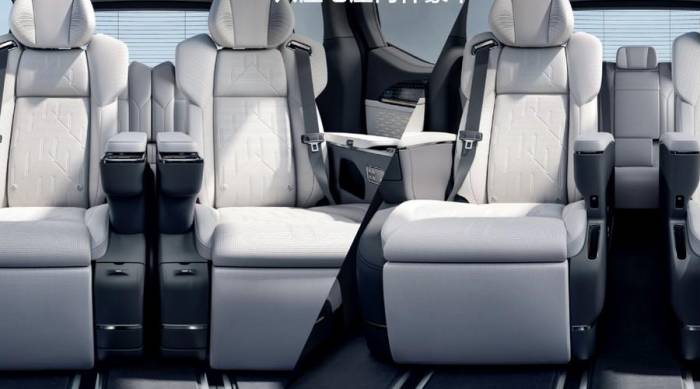
The C10 is particularly crucial. It's the first model developed from the start with global markets in mind and is the spearhead for their international expansion under the Stellantis partnership. I've sat in one at an auto show. The interior feels minimalist and well-put-together, though some trim materials remind you it's a value proposition. The space, especially the rear legroom, is genuinely impressive for its class.
What's the Driving Experience Like?
Reviews from Chinese automotive media like 汽车之家 (Autohome) often praise Leapmotor for offering a surprisingly refined and quiet ride for the price. The acceleration is typically more than adequate for daily use—these aren't meant to be track monsters. The common critique isn't about performance but sometimes about the finishing touches or the learning curve of their infotainment system. The consensus is you get a lot of car for your money, especially on the tech front.
How Leapmotor Builds Cars: The Vertical Integration Edge
"Vertical integration" is a buzzword in EV circles, but Leapmotor takes it seriously. While Tesla is the most famous example, Leapmotor in China is attempting a similar playbook on a smaller, faster scale.
Instead of assembling parts from hundreds of suppliers, they design and manufacture the core components themselves. This includes:
- The Electric Powertrain: Their in-house developed "Heracles" electric motor and reduction gearbox.
- The Battery Pack: They design the battery pack architecture and the cell-to-chassis (CTC) integration, sourcing the individual battery cells from partners like CALB.
- The Intelligent Cabin & Driving Systems: This is Zhu Jiangming's legacy. They develop their own domain controllers, the Lingxin AI chips, and the foundational software.
The supposed advantage? Cost control, speed, and synergy. By cutting out the middleman, they aim to reduce costs. By controlling the software and hardware stack, they can theoretically update and optimize the car's performance and features over-the-air more effectively. It's a high-stakes strategy. It requires massive R&D investment upfront and carries the risk of technological dead-ends. But if executed well, it creates a formidable moat.
The Stellantis Game-Changer: A Deal That Changes Everything
This is the part that most people miss when they ask "Who makes Leapmotor?" In late 2023, a seismic shift happened. Stellantis—the global auto giant born from the merger of PSA (Peugeot, Citroën) and FCA (Fiat, Jeep, Chrysler)—invested €1.5 billion to acquire a 21% stake in Leapmotor and, more importantly, form a joint venture.
This JV, 51% owned by Stellantis and 49% by Leapmotor, has exclusive rights to export and sell Leapmotor vehicles outside Greater China, and to manufacture Leapmotor cars locally in foreign markets.
Let that sink in. Stellantis, with its vast global dealer network, manufacturing footprint, and market knowledge, is now the one who will make and sell Leapmotor cars in Europe, Asia-Pacific, the Middle East, and South America. This instantly solves Leapmotor's biggest hurdles: lack of brand recognition, no sales or service network, and no local production to avoid tariffs.
The first model for this global push is the Leapmotor C10 SUV. You can expect to see it rebadged or sold under its own name in European Stellantis dealerships. This partnership validates Leapmotor's technology and provides a rocket ship for global growth. It's no longer just a Chinese EV maker; it's a technology partner for a top-5 global automaker.
Your Leapmotor Questions, Answered
So, who makes Leapmotor? It's a company forged by a tech visionary, built on a strategy of deep vertical integration, and now propelled onto the world stage by one of the industry's largest players. They're not just manufacturing cars; they're betting that controlling the core intelligence of the vehicle is the ultimate key to the future. Whether you're considering one of their models or just watching the EV landscape, Leapmotor is a name that's now impossible to ignore.