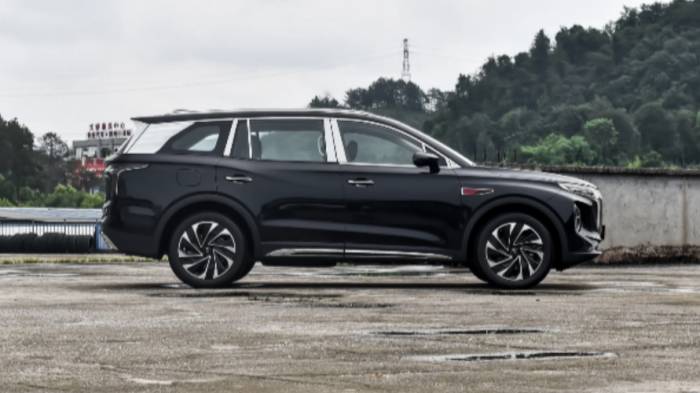
You've seen the badge—the three shields in a circle. Maybe you remember your grandpa's big, plush sedan, or you've noticed a sharp-looking SUV on the road lately. The question "What is Buick?" pops up more than you'd think. Is it a luxury brand? Is it just for retirees? Is it even still American? The answers might surprise you. Forget the dusty stereotypes. Today's Buick is a unique player, carving out a smart niche between mainstream and luxury. Let's cut through the noise and get into what this brand really is, who it's for, and why it deserves a spot on your shopping list.
Quick Navigation
From Carriages to Crossovers: The Buick Story
To understand what Buick is, you have to know where it came from. David Dunbar Buick founded the company in 1899, but it was William C. Durant who saw its potential. In 1908, Durant used Buick as the foundation to create a new corporate giant: General Motors. That's right—Buick is the cornerstone of GM. For decades, it was GM's middle child, positioned above Chevrolet and below Cadillac.
Buick wasn't just about status. It was an innovator. The 1938 Buick Y-Job is widely considered the first concept car ever. In the 1960s and 70s, they built the legendary GSX and the Riviera—muscle and personal luxury cars that are now collector's dreams.
But the landscape shifted. By the 1990s and 2000s, the brand struggled with an aging image in the US. The real plot twist? While America was looking elsewhere, Buick became a superstar in China. It's seen as a premium, aspirational brand there. That success funneled billions back into development, directly influencing the vehicles we see now. The Buick of today is a global product, with heavy input from its Chinese market success.
Key Takeaway: Buick isn't a fading nameplate. It's a 120-year-old brand that funded the creation of GM, pioneered car design, and now leverages its massive global success (especially in China) to develop competitive vehicles for the modern era. That international clout is a huge advantage.
What is Buick Today? The Modern Lineup
Walk into a Buick showroom now, and you won't find many of those traditional sedans. The brand has pivoted almost entirely to SUVs and crossovers, with one notable exception. Their current philosophy is "quiet luxury"—focusing on a serene, comfortable, and well-appointed driving experience without the flashy price tag of a German badge.
| Model | Type | Key Characteristics | Starting Price (Approx. MSRP) |
|---|---|---|---|
| Enclave | Large 3-Row SUV | The flagship. Spacious, smooth, family-hauler with available AWD. Think of it as a more affordable, comfort-focused alternative to an Audi Q7. | $44,000 - $55,000 |
| Envision | Compact Luxury SUV | The sweet spot. Sits between the compact and midsize segments. Offers premium interior materials (real stitching, soft-touch surfaces) and a great balance of size and efficiency. | $35,000 - $45,000 |
| Encore GX | Subcompact SUV | The urban runabout. Not to be confused with the older Encore. The GX is newer, more refined, and surprisingly upscale for its small size. Perfect for city driving. | $26,000 - $33,000 |
| Regal TourX (Discontinued but relevant) | Wagon | A cult favorite. Showed Buick's adventurous side. Combined car-like handling with SUV space. Finding a used one in good condition is a savvy move. | N/A (Used: $20k-$30k) |
The common thread across all of them is an emphasis on a quiet cabin. Buick uses active noise cancellation and lots of sound-deadening material. It's a tangible difference you notice on the highway. The interiors, while not always full-leather-everything like a Cadillac, are a significant step above a Chevrolet or Toyota. You get padded door panels, intuitive infotainment (now almost always with a standard touchscreen and Apple CarPlay/Android Auto), and comfortable, supportive seats.
The Real Deal: Buick's Strengths & Weaknesses
Let's be honest, no brand is perfect. After driving several recent models and talking to owners, here's the unfiltered breakdown.
Where Buick Shines (The Pros)
- Ride Comfort & Quietness: This is their signature. The combination of tuned suspensions and acoustic glass makes long trips genuinely relaxing. It's their biggest competitive edge.
- Value Proposition: You get features and interior quality that feel a class above the price. A well-equipped Envision can feel like a $50,000 European SUV but costs thousands less.
- Strong Reliability Ratings: This is crucial. Recent J.D. Power dependability studies consistently rank Buick near the top among all brands, often above Toyota and Honda. Their 4-cylinder engines and transmissions are proven.
- Good Safety Scores: Most models earn Top Safety Pick or similar ratings from the IIHS. Advanced safety tech (like automatic emergency braking) is now widely standard.
Where Buick Stumbles (The Cons)
- Bland Driving Dynamics: Don't buy one for thrilling cornering. The steering is light and numb, the focus is on comfort, not sport. It can feel disconnected if you're an enthusiast.
- Resale Value Lag: While reliability is good, the brand's image still hurts resale compared to a Honda CR-V or Toyota RAV4. You get more for your money new, but might get less back later.
- Interior Hits & Misses: While generally nice, some lower-trim models can have surprising patches of hard plastic on the dashboard or console. You have to move up a trim level to get the full "premium" feel.
- The Dealer Experience Varies: Some Buick-GMC dealers are excellent. Others still feel like they're stuck in 2005. It's less consistently polished than a Lexus or Acura dealership.
So, Who Exactly is a Buick For?
This is the million-dollar question. Based on everything above, a Buick is a fantastic fit for a specific, and actually quite large, group of people.
The Comfort-Seeking Commuter: If you spend an hour or more in the car each day and value a peaceful, stress-free environment, a Buick's cabin is therapy on wheels.
The Value-Conscious Upgrader: You're done with basic transportation. You want leather seats, a good sound system, and a quiet ride, but a BMW X3 or Mercedes GLC stretches the budget too far. A Buick Envision slots right in.
The Practical Family (Especially with the Enclave): You need three rows but don't want a truck-like SUV. The Enclave offers minivan space with a more stylish, car-like demeanor.
The Informed Used-Car Buyer: Because of that softer resale value, a 2-3 year old Buick with low miles is an incredible used car bargain. You let the first owner take the depreciation hit and get a nearly-new, reliable, comfortable vehicle.
It's not for the driving enthusiast, the badge-snob who needs a luxury logo for status, or someone who plans to trade in their car every 2-3 years (the depreciation will sting).
Thinking of Buying One? Here's Your Checklist
Ready to take a closer look? Don't just walk onto the lot. Do this first.
1. Drive It on Your Route. Don't just take the dealer's loop. Get on the highway. Does the quietness impress you? Go over a rough patch of road. Does the suspension absorb it well? This is where Buick wins or loses.
2. Play With the Tech. Sit in the driver's seat for 10 minutes. Connect your phone. Is the infotainment screen responsive? Are the climate controls easy to use while driving? Some models have touch-sensitive climate buttons that can be annoying.
3. Check the Specific Model's Reliability History. While the brand is strong, visit sites like Consumer Reports or the NHTSA database to see if the specific model year you're looking at has any common trouble spots.
4. Price It Against a Lexus NX/RX or Acura RDX/MDX. This is the real competition. You might find the Buick is better equipped for the money, or you might discover you prefer the sharper driving feel of the Acura. Cross-shop intelligently.
5. Don't Skip the Certified Pre-Owned (CPO) Lot. Buick's CPO program is strong, often adding warranty years. Given the depreciation, this is arguably the smartest way to buy one.