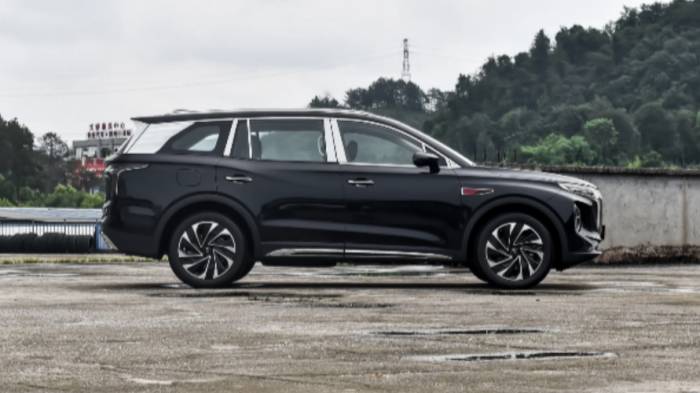
Let's be honest. When you first heard the name "Luxeed," you probably didn't think of a century-old coachbuilder. You thought of Huawei. And that's the entire point. The question "Is Luxeed a luxury car brand?" isn't about leather stitching alone; it's a proxy for a bigger debate: in the electric age, does luxury come from heritage, or from silicon and software? After digging into the specs, the design philosophy, and the actual ownership proposition of the Luxeed S7, my conclusion is this: Luxeed is not a traditional luxury brand. It's a premium tech brand that happens to build cars, and it's targeting a very specific gap in the market that Mercedes and BMW are still awkwardly trying to fill.
What's Inside This Deep Dive
- What Makes a Car 'Luxury'? The Old Rules vs. The New
- Luxeed's Origin Story: It's All About the Tech Stack
- The Luxury Checklist: Where the Luxeed S7 Scores (and Stumbles)
- The Core Argument: Technology *Is* the New Luxury
- The Inevitable Comparison: Luxeed S7 vs. Tesla Model S
- The Verdict: Where Does Luxeed Truly Stand?
- Your Burning Questions Answered
What Makes a Car 'Luxury'? The Old Rules vs. The New
For decades, the formula was simple. A luxury car had:
Silence. A vault-like cabin that hushed the outside world.
Materials. Walnut, supple leather, real metal, thick carpet.
Build Quality. Panel gaps you couldn't fit a credit card into. A solid 'thunk' when the door closed.
Brand Prestige. The three-pointed star, the blue-and-white propeller, the four rings.
Smooth Power. A large, multi-cylinder engine that delivered effortless acceleration.
Electric vehicles shattered half of this list. The powertrain is inherently silent and smooth. The 'engine' is irrelevant. So, brands had to pivot. Tesla redefined luxury as software velocity and a minimalist aesthetic. Others doubled down on bespoke materials and hyper-personalization.
Luxeed enters this confused landscape. It doesn't have the heritage. It can't sell you on a legacy of motorsport victories. Its play is to make the car's digital nervous system the primary luxury feature.
Luxeed's Origin Story: It's All About the Tech Stack
Luxeed is a joint venture between Huawei and Chery. Stop right there. This tells you everything. Chery brings the manufacturing and vehicle platform expertise. Huawei brings everything else that defines the modern car experience: the HarmonyOS-powered infotainment, the advanced driver-assistance systems (marketed as Huawei ADS 2.0), the sound system, the connectivity, and the over-the-air update architecture.
This isn't a car company adding tech. This is a tech company (Huawei) defining the car. The branding is clever—Luxeed sounds European, premium. But the soul of the car is in Shenzhen. When you sit in an S7, you're not sitting in a traditional cabin; you're sitting inside a Huawei ecosystem that can move.
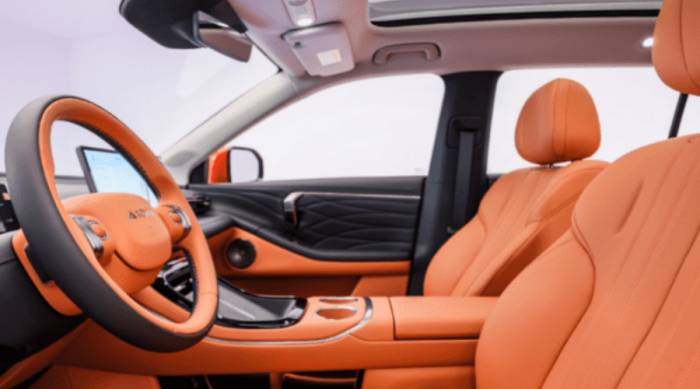
I remember the first time I saw the S7's dashboard. It's not a screen; it's a 35-inch 4K OLED panoramic display that stretches across the entire width. It's stunning. It also immediately signals that this car's priority is pixel density, not burl wood.
The Luxury Checklist: Where the Luxeed S7 Scores (and Stumbles)
Let's apply the traditional and modern metrics.
Where It Excels (The New Luxury)
Technology Integration: This is its home turf. The HarmonyOS system is fluid, intuitive, and deeply integrated with Huawei's phone, watch, and tablet ecosystem. If you're in that ecosystem, the seamless handoff is a genuine luxury. The voice assistant is context-aware and useful, not a gimmick.
Driver-Assistance & Safety: Huawei's ADS 2.0 is arguably one of the most capable systems on the market, using lidar, cameras, and radar for a robust sensor fusion. Its ability to handle complex urban driving and navigate without mapped highways (as reported by Chinese automotive media) is a technical feat that rivals or exceeds offerings from more established brands. This reduces cognitive load on long trips—a modern form of luxury.
Digital Comfort: Massaging seats, ambient lighting, and premium audio are table stakes. Luxeed's differentiator is how these are controlled and personalized through its software. The level of customization for driving modes, ambient scenarios, and seat/mirror/steering positions feels next-gen.
Where It's Merely Good, Not Exceptional (The Old Luxury)
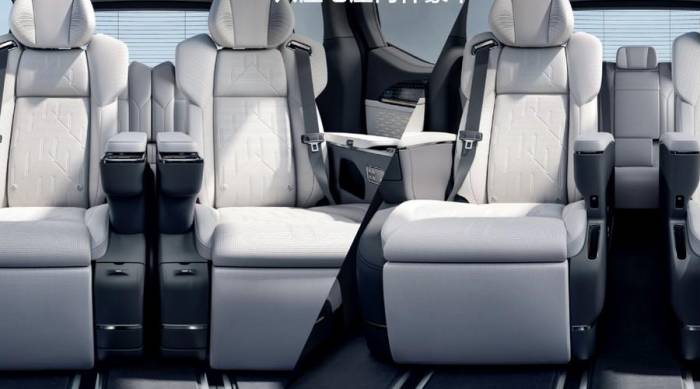
Material Perception: Here's the nuance most reviews miss. The S7 uses good materials—Nappa leather, soft-touch plastics, alcantara. But the perceived quality, the tactility and heft of switches, the damping of storage cubbies, doesn't quite hit the obsessive level of a Mercedes EQS or a Lucid Air. It feels premium, not opulent. There's a slight over-reliance on glossy black plastic that will attract fingerprints.
Acoustic Insulation: It's very quiet, thanks to the EV powertrain and double-glazed glass. But at highway speeds, some road and wind noise does seep in more than in the segment's gold standards. It's not a deal-breaker, but it's a reminder that sound-deadening is an art perfected over decades.
Brand Cachet: Zero. You're not buying a status symbol; you're buying a statement of technological affinity. For some, this is a pro, not a con.
The Core Argument: Technology *Is* the New Luxury
This is the non-consensus view. For a growing segment of buyers, especially those under 50, the anxiety of an outdated infotainment system or a clumsy driver-assist is more acute than the absence of quilted leather on the lower door panel.
Luxeed's luxury proposition is competence and seamlessness. It's the luxury of your car getting better via an OTA update six months after you bought it. It's the luxury of a navigation system that projects detailed, augmented reality directions onto your windshield, making city driving stress-free. It's the luxury of a single, cohesive software experience that doesn't feel like it was bolted on by a third-tier supplier.
Huawei's involvement is a double-edged sword. In markets where its brand is strong, it's a huge tech credibility boost. In others, geopolitical perceptions may affect its appeal. But on a pure product level, it gives Luxeed a tech advantage most legacy automakers are struggling to match in-house.
The Inevitable Comparison: Luxeed S7 vs. Tesla Model S
You can't talk premium EVs without talking Tesla. The Model S is the incumbent tech-luxury sedan. Here’s how they stack up on paper and philosophy.
| Feature / Aspect | Luxeed S7 (Dual Motor Performance) | Tesla Model S (Long Range) |
|---|---|---|
| Core Philosophy | Tech-integrated luxury sedan. HarmonyOS ecosystem centerpiece. | Performance-focused software machine. Minimalist design ethos. |
| Interior Tech | Single 35-inch 4K OLED panoramic screen. Huawei HarmonyOS. | 17" center screen + secondary rear screen. Tesla OS. |
| Driver Assistance | Huawei ADS 2.0 (Lidar-based). Strong urban/point-to-point navigation. | Tesla FSD (Vision-only). Extensive real-world data. |
| Performance (approx.) | ~3.3s 0-100 km/h, ~650 km CLTC range | ~3.1s 0-100 km/h, ~650 km EPA range |
| Interior Ambiance | More traditional "cockpit" layout with digital twist. More physical buttons/ambient lighting. | Extreme minimalism. Yoke steering optional. Few physical controls. |
| Charging Network | Relies on public CCS/third-party networks (varies by region). | Proprietary, extensive Supercharger network (a major luxury). |
| Typical Price Point | Positioned as a value-play, often significantly cheaper than Model S. | Premium price segment. |
The takeaway? The Model S is a known quantity—a blisteringly fast, software-centric car with an unmatched charging ecosystem. The Luxeed S7 offers a different flavor of tech. It feels more like a traditional sedan that's been digitally supercharged, with arguably more advanced sensor hardware for autonomy and a focus on immersive screens and ecosystem integration. For someone who finds Tesla's interior too spartan, the S7 presents a compelling, tech-heavy alternative.
The Verdict: Where Does Luxeed Truly Stand?
So, is Luxeed a luxury car brand?
Not by the classic definition. It lacks the heritage, the unrivaled material decadence, and the global brand prestige of the established players.
But the classic definition is eroding. In the electric era, Luxeed is a first-tier premium tech brand competing directly with Tesla and challenging the tech offerings of Audi, BMW, and Mercedes. Its luxury is experiential and digital: seamless software, cutting-edge assisted driving, and a hyper-connected cabin. It's for the buyer who prioritizes computing power and digital fluency over historical pedigree.
If your benchmark for luxury is the whisper-quiet, material-rich serenity of a Mercedes EQS, the Luxeed S7 might feel a bit too digitally buzzy. But if your benchmark is the Tesla Model S, and you wish it had a more conventional interior layout, better interior materials, and a more powerful sensor suite, then the Luxeed S7 isn't just an alternative—it might be the more rational, forward-thinking choice.
Call it a "Tech Luxury" brand. It's carving its own category, and for the right buyer, that's exactly where the value lies.
Your Burning Questions Answered
Is the Luxeed S7 better than a Tesla Model 3 or Model S?
What's the biggest downside of choosing a Luxeed over a German luxury EV?
I care about range anxiety. How does Luxeed's real-world range and charging hold up?
Does the Huawei tech in the car pose any data privacy or future update risks?