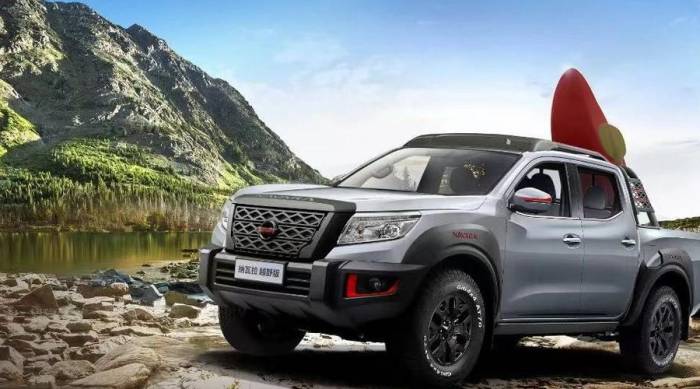
Let's be honest. The compact SUV market is flooded. You've got your Toyotas, your Hondas, your Hyundais. They're all good, safe, and... predictable. Then along comes the Jetour X1 Dashing. It's not from a household name, and that makes people nervous. Is it just another cheap knock-off, or does it bring something genuinely fresh to the table? I spent a week with one, not just driving to the grocery store, but on a mix of city commutes, highway hauls, and even a mildly adventurous weekend trip. Here's what I found, stripped of the marketing fluff.
What's Inside This Review
First Impressions: More Than Just a Pretty Face?
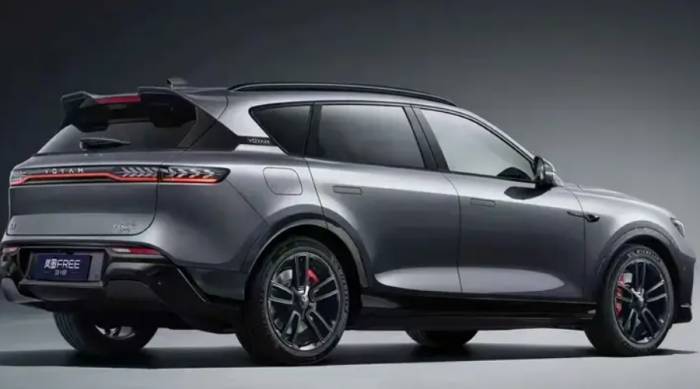
Park the X1 Dashing next to a Kia Seltos or a Hyundai Creta, and it'll turn more heads. Jetour's designers weren't afraid to take risks. The front grille is massive and angular, flanked by slim LED daytime running lights. The body has sharp character lines, and the rear light bar gives it a modern, almost European look.
It's bold. Some might call it aggressive. My neighbor asked if it was an electric car from a new startup. That's the vibe it gives off – it doesn't look like a budget offering.
But here's the non-consensus part everyone misses: fit and finish. When you're comparing specs online, you see "LED lights" and "alloy wheels." What you don't see is how the panels align. I walked around the car, pressing on body panels and checking gaps. On the whole, it was surprisingly good for its price point. The doors closed with a solid *thunk*, not a tinny rattle. However, the plastic cladding around the wheel arches felt a bit thin to the touch. It's a minor thing, but it's a tell. Jetour prioritized the visual wow factor where you see it, and maybe cut a tiny corner where you don't.
Living With It: Interior, Tech, and Daily Usability
Open the door, and the cabin continues the theme. It's not draped in leather, but the materials are a step above hard, scratchy plastic. You get soft-touch surfaces on the dashboard and door cards. The seats are supportive, even for a 3-hour drive.
Space and Practicality: The Family Test
I loaded it up for a weekend trip for two adults and one child. Here's the breakdown:
- Front Seats: Plenty of room. No complaints.
- Rear Seats: Legroom is decent. A six-foot passenger can sit behind a six-foot driver without their knees touching the seatback. Headroom is excellent.
- The Trunk: This is where the "compact" label shows. The boot space is just enough. We fit a medium suitcase, a duffel bag, a cooler, and a backpack. It was full. A family of four on a week-long vacation would need to pack strategically or use a roof box. The rear seats do fold nearly flat, which helps.
- Small Storage: Cup holders, door bins, a decent center console – it has the basics covered. The wireless charging pad (on higher trims) is a nice touch.
It's a city car that can handle weekend duties, not a road trip hauler.
How Does the Jetour X1 Dashing Perform on the Road?
This is where most reviews just quote the 0-100 km/h time. Let's talk about what it's actually like to drive.
My test car had the 1.5-liter turbocharged gasoline engine, paired with a 7-speed dual-clutch automatic (DCT). The power figure is around 150 horsepower, which is competitive.
| Driving Scenario | How the X1 Dashing Feels | The Good & The Not-So-Good |
|---|---|---|
| City Traffic | Surprisingly peppy off the line. The turbo spools up quickly. | Good: Easy to maneuver, light steering. Not-So-Good: The DCT can be hesitant in stop-and-go crawls, with a slight jerk when engaging first gear. |
| Highway Cruising | Stable and confident at 110 km/h. Overtaking requires a downshift, but power is sufficient. | Good: Low wind noise. Suspension soaks up most imperfections. Not-So-Good: Engine gets a bit vocal when pushed hard for a pass. |
| Country Roads | More fun than expected. Body roll is controlled. | Good: Steering weight increases nicely. It feels planted. Not-So-Good: The tires (on the base model) aren't performance-oriented, so grip limits are reached earlier. |
The suspension tuning is a highlight. It's firm enough to feel sporty but compliant enough to not beat you up over broken pavement. It strikes a better balance than many of its rivals, which often err too far on the soft, wallowy side.
A common mistake first-time drivers make? They treat the DCT like a traditional torque-converter automatic. If you creep forward in traffic by just lifting the brake, the DCT clutch engagement can feel rough. Give it a bit of throttle to get moving, and it's much smoother. It's a small technique adjustment that makes a big difference.
The Real Test: Fuel Economy and Ownership Costs
Let's talk numbers. The claimed fuel economy is around 16-17 km/liter (roughly 38-40 MPG). In my real-world mixed driving, I averaged 14.5 km/liter (about 34 MPG). That's with a 70/30 split of highway and aggressive city driving (using the AC). It's respectable, but don't expect to hit the official numbers unless you drive like a hypermiler.
Now, the elephant in the room: ownership costs for a lesser-known brand.
- Purchase Price: This is its biggest weapon. It's significantly cheaper than a similarly equipped Toyota Corolla Cross or Honda HR-V. You're getting more features for less money upfront.
- Warranty: Jetour typically offers a long warranty (e.g., 5 years/150,000 km) to build consumer confidence. Check the specific terms in your region.
- Service & Parts: This is the potential headache. Dealership network density varies wildly. In major cities, you're fine. In smaller towns, it could be an issue. Parts availability for major repairs might take longer than for a Toyota. This isn't a deal-breaker, but it's a crucial planning point.
You're trading lower upfront cost for potential future inconvenience. For many buyers, that's a worthwhile trade.
Who Should (and Shouldn't) Buy the Jetour X1 Dashing
This isn't a car for everyone. Let's be blunt.
Buy the Jetour X1 Dashing if: You're a style-conscious first-time car buyer, a young family with modest cargo needs, or anyone who wants a feature-packed, fun-to-drive SUV without breaking the bank. You value design and driving dynamics over brand prestige and have reasonable access to a service center.
Look elsewhere if: You need a cavernous trunk for frequent big hauls, you plan to keep the car for 10+ years and are deeply concerned about long-term resale value (though the warranty helps), or you live in a remote area hundreds of miles from the nearest Jetour dealer. The peace of mind of a ubiquitous brand like Toyota might be worth the extra cost for you.
Your Burning Questions Answered
So, is the Jetour X1 Dashing worth your money? If your priority is getting a visually striking, well-equipped, and engaging compact SUV for a very competitive price, and you've done your homework on local dealer support, it's a compelling and smart choice. It's not perfect—the boot is small, the brand is new—but it delivers where it counts: on the road and in your wallet. It proves you don't have to pay a premium for a car that makes you look back at it after you park.