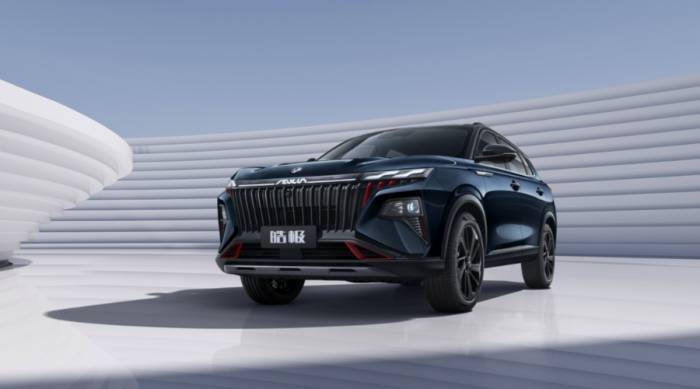
Let's cut straight to the chase. If you're looking at the sleek, tech-packed XPeng Mona M03 and wondering where it's put together, the direct answer is: the XPeng Mona M03 is manufactured at XPeng's own Zhaoqing Smart Manufacturing Base in Guangdong Province, China. The specific address is in the Zhaoqing High-tech Industrial Development Zone. But if you stop there, you're missing the real story. The "where" is just a pin on a map. The "why there" and "what it means for you" is where things get interesting, and frankly, where most articles drop the ball.
What You'll Find in This Guide
The Definitive Answer: It's Made in Zhaoqing, China
XPeng's primary and most advanced production home is its Zhaoqing Smart Manufacturing Base. This isn't some contracted-out factory; it's XPeng's flagship, self-built plant. Think of it as their crown jewel for manufacturing. Construction started in late 2017, and it kicked off mass production in 2020. It's a massive facility, covering over 1,500 acres, designed from the ground up for electric vehicle production.
I've seen the drone footage and official plant tours. The scale is immense. This is where the core magic happens for their key models, and the Mona M03 is right in the mix. Choosing to build your own mega-factory versus contracting (like many startups do) is a billion-dollar declaration of intent. It says XPeng is in this for the long haul, betting on its own ability to control quality, cost, and innovation speed.
Why XPeng's Manufacturing Strategy Matters More Than You Think
Here's a nuance most buyers gloss over: they get fixated on brand names and specs but treat the factory as a trivial detail. In the EV world, especially with new brands, where and how your car is built is one of the biggest predictors of long-term reliability and satisfaction. Let me explain the two main paths:
Many EV startups begin with "contract manufacturing" or "joint venture" production. They hire another company (often an established automaker with spare capacity) to build their cars. It's faster to market, but you sacrifice direct control over every weld, paint step, and software flash. XPeng did this initially with the G3, which was produced by Haima Automobile. They learned from it.
The Mona M03 benefits from XPeng's strategic pivot to vertical integration. By building the Mona M03 in-house at Zhaoqing, XPeng controls the entire process. This allows for tighter integration of their proprietary tech—like the advanced driver-assistance systems (ADAS) and the infotainment—directly into the production flow. There's no middleman interpreting the engineering specs.
| Aspect | Contract Manufacturing (Early XPeng G3) | Owned Smart Factory (XPeng Mona M03 at Zhaoqing) |
|---|---|---|
| Quality Control | Relies on partner's standards and processes. May have consistency gaps. | XPeng sets and enforces its own rigorous, tech-focused standards end-to-end. |
| Technology Integration | Harder to implement deep, real-time software/hardware integration on the line. | Seamless integration of XPeng's full-stack tech (ADAS, smart cabin) during assembly. |
| Production Flexibility | Limited by partner's schedule and priorities. Changes are slow. | Can rapidly tweak the line for over-the-air updates, new features, or model adjustments. |
| Cost & Scale Long-term | Higher per-unit cost paid to manufacturer; limits margin and scaling economics. | Greater control over costs, efficiency, and scaling as volume grows. |
| Supply Chain Control | Dependent on partner's supplier network. | XPeng manages its own supply chain, crucial for battery and chip sourcing. |
This shift isn't just corporate jargon. When you pick up your Mona M03 and the panel gaps are even, the paint is flawless, and all the software features work in harmony from day one, that's the Zhaoqing factory's direct influence. It's the difference between outsourcing your masterpiece and crafting it in your own workshop.
Inside the Zhaoqing Smart Manufacturing Base
So, what's special about this place? "Smart Manufacturing" isn't a marketing buzzword here. The Zhaoqing plant is built with Industry 4.0 principles. We're talking about:
How Does XPeng Ensure Quality at the Zhaoqing Plant?
Robots. Lots of them. The welding shop is over 90% automated. This isn't just about saving labor; it's about precision and repeatability. A robot applies the same spot weld, with the exact same pressure, in the exact same location, for the 1st and the 10,001st car body. That consistency is the bedrock of build quality.
The paint shop is a fully enclosed, automated environment controlling dust, temperature, and humidity. They use advanced inspection systems that use cameras and sensors to detect imperfections in the paint finish that the human eye would miss.
But here's a critical point everyone misses: the final assembly line, where humans and machines work together, is where the software comes alive. At Zhaoqing, each Mona M03 undergoes a comprehensive electronic system check. Its full suite of sensors (cameras, radars, ultrasonics) is calibrated and tested. Its infotainment system is flashed with the latest software. This integrated testing is possible because XPeng owns both the car's brain and the factory that installs it.
Can You Track Your XPeng Mona M03 During Production?
This is a cool, practical implication. Because the production is so digitized, XPeng has the potential to offer detailed production tracking to customers, similar to what you get with a Tesla. While their current customer app may not show live camera feeds of your car being built (few do), the vehicle identification number (VIN) assigned to your order is tied to the production data at Zhaoqing. Your sales advisor can often give you updates on key milestones: when the body-in-white is complete, when it enters paint, when it rolls off the final line. It’s not just a black box.
How the Manufacturing Location Directly Impacts You
Okay, it's a cool, high-tech factory in South China. What does that mean for you, the driver sitting in Europe, Southeast Asia, or elsewhere waiting for your Mona M03?
Quality and Consistency: This is the biggest benefit. A controlled, owned manufacturing process drastically reduces the chance of "Friday afternoon cars"—vehicles with odd build issues. The standards are uniform.
Delivery Timelines and Logistics: The Zhaoqing plant is in Guangdong, a manufacturing and export powerhouse with world-class port infrastructure nearby (like the port of Guangzhou/Shenzhen). For markets outside China, this means efficient logistics. Cars can be loaded directly onto roll-on/roll-off (RORO) ships. A streamlined process from factory to port can shave weeks off delivery times compared to a plant located inland with complex transport logistics.
After-Sales and Parts: Having a centralized, modern primary factory simplifies the spare parts supply chain. When a replacement part is needed, it's likely sourced from the same production line or its dedicated spare parts division, ensuring it's an exact match.
Pricing: Vertical integration and efficient, automated production at scale help XPeng manage costs. While not the sole factor, producing the Mona M03 efficiently at Zhaoqing contributes to its competitive pricing in the global market against rivals who may still rely on contract manufacturing.
Beyond Zhaoqing: XPeng's Broader Production Footprint
While Zhaoqing is the heart, XPeng isn't putting all its eggs in one basket. They've expanded their manufacturing footprint strategically:
Guangzhou Plant: A newer, equally advanced facility in their hometown. It increases total production capacity and offers redundancy. Some Mona M03 production could potentially be allocated here to meet demand, especially for certain markets. The processes and standards are mirrored from Zhaoqing.
Wuhan Plant (Under Development): Announced for future expansion, focusing on next-generation platforms. This shows long-term planning beyond current models.
International Assembly (Future Potential): Like all major Chinese EV makers eyeing global markets (BYD, NIO), XPeng has explored or may consider local assembly in key overseas markets (e.g., Southeast Asia, Europe) to avoid tariffs and reduce delivery lead times. However, for the foreseeable future, the Mona M03 you buy will be a Made-in-Zhaoqing product.
This multi-plant strategy isn't about shifting production to cheaper locations; it's about capacity, risk mitigation, and getting closer to key customers. It's a sign of a maturing automaker.
Your Burning Questions About Mona M03 Production, Answered
Does the ‘Made in China’ label affect the XPeng Mona M03’s quality or resale value?
How can I find out the exact production date of my specific Mona M03?
Are all the parts, especially the battery, also made in China?
If I’m ordering in Europe, will my Mona M03 be built differently?