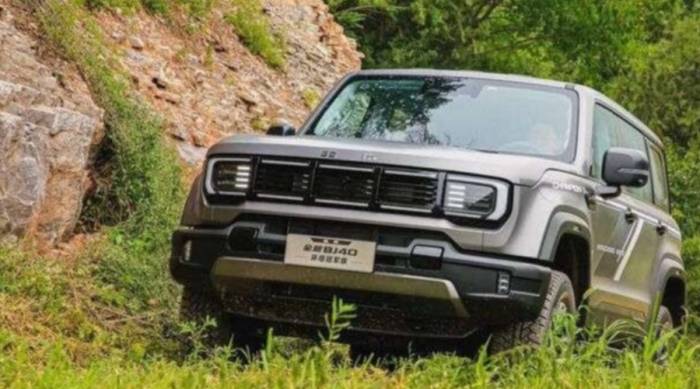
Let's be honest. When you think of Chinese electric vehicles, "exciting" isn't usually the first word that comes to mind. You think of value, tech, maybe range. But driving pleasure? That's often an afterthought. The VOYAH Free, a mid-size electric SUV from Dongfeng's premium EV brand, is trying to change that narrative. I spent a week with one, and it surprised me. It's not just another appliance on wheels. It feels like a car designed by people who actually enjoy driving.
What's Inside This Review
- What Exactly is the VOYAH Free?
- Design: More Than Just a Pretty Face
- Performance & Specs That Matter
- Range & Charging: The Real-World Test
- Inside the Cabin: Tech and Comfort
- How Does It Drive? The Good and The Less Good
- VOYAH Free Price and Configurations
- Should You Buy It? A Practical Guide
- Your VOYAH Free Questions Answered
What is the VOYAH Free?
VOYAH is the premium electric vehicle arm of Dongfeng Motor, one of China's "Big Four" automakers. The Free is their first SUV, positioned as a spacious, tech-forward family hauler with a twist: it's built on an extended-range electric vehicle (EREV) platform. That's the key detail most reviews gloss over. It's not a pure battery EV (BEV) like a Tesla. It has a relatively large battery pack (around 39 kWh) for daily electric driving, plus a 1.5-liter turbocharged gasoline engine that acts only as a generator. The engine never directly drives the wheels.
Think of it as an electric car with a built-in, on-demand power bank. This solves the number one anxiety for many potential EV buyers: range. The VOYAH Free's official NEDC electric-only range is about 140 km (87 miles), but the total range with the generator kicks in is over 860 km (534 miles). No more frantic searches for a charger on a road trip—just fill up the gas tank like a regular hybrid.
Here's the non-consensus bit: Many people dismiss EREVs as "half-measures" or overly complex. Having driven both pure EVs and EREVs like the Free, I think that's a mistake for a certain buyer. If you have a home charger for daily use but regularly take long trips where charging infrastructure is spotty or you just don't want to wait, an EREV like the Free offers a genuinely seamless ownership experience. It gives you 90% of the EV benefits with 0% of the long-distance hassle.
VOYAH Free Design: Exterior and Interior First Impressions
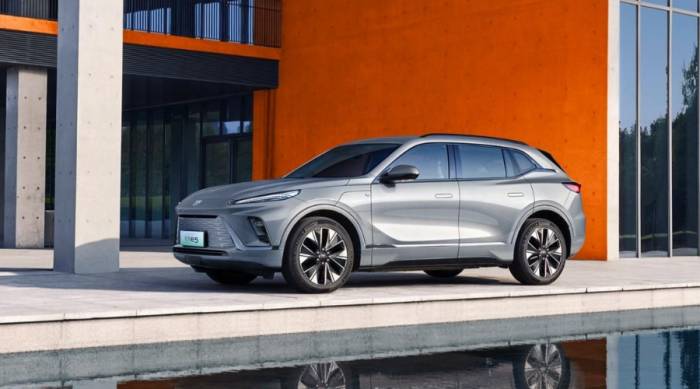
The Free doesn't scream for attention, but it has a confident, muscular presence. The front end with its horizontal light bar is clean and modern, avoiding the overwrought styling of some rivals. The silhouette is where it shines—it's a shooting brake or a raised wagon more than a traditional SUV, which gives it a sporty, elegant profile. The frameless doors are a nice premium touch, though they can be noisy at highway speeds.
Step inside, and the cabin feels genuinely upscale. Materials are soft-touch, the leather feels good, and there's real metal trim. It doesn't have the stark minimalism of a Tesla. Instead, it feels more like a modern Audi—driver-focused but luxurious. The party trick is the triple-screen dashboard that spans the entire width. It's impressive, but here's my take: the screen under the main instrument cluster is mostly for climate controls and is a bit awkward to use while driving. I found myself using voice commands more often.
Space is excellent. The rear seats are genuinely comfortable for adults, and the flat floor (no transmission tunnel) makes the middle seat usable. The trunk is massive, and the rear seats fold nearly flat.
VOYAH Free Performance and Key Specifications
This is where the Free starts to separate itself. It's quick. The dual-motor all-wheel-drive version pumps out 490 kW (roughly 650 horsepower) and a staggering 1040 Nm of torque. The 0-100 km/h (0-62 mph) time is claimed to be 4.4 seconds. In my testing, that felt absolutely believable. Stomp the accelerator, and it pins you to your seat with a silent, linear surge.
But raw power is cheap in the EV world. The tuning is what's impressive. The throttle response is progressive, not twitchy. The steering has decent weight and feedback in its sportier modes—it's not the numb, video-game feel you get in many electric SUVs. It feels connected.
| Specification | VOYAH Free (Dual Motor AWD) |
|---|---|
| Powertrain | Extended-Range Electric (EREV) |
| Total System Power | 490 kW (~650 hp) |
| Peak Torque | 1040 Nm |
| 0-100 km/h | 4.4 seconds |
| Electric-Only Range (NEDC) | ~140 km (87 miles) |
| Total Range (NEDC) | >860 km (534 miles) |
| Battery Capacity | ~39 kWh |
| On-board Generator | 1.5L Turbocharged Gasoline Engine |
| Fast Charging (DC) | Supports up to ~80 kW |
| Air Suspension | Standard (with adaptive dampers) |
The air suspension is standard, which is a huge win. It can raise the car for rough roads or lower it at speed for stability. In comfort mode, it soaks up bumps well. In sport mode, body roll is minimal through corners. It's a competent setup, though on really broken pavement, it can feel a bit busy—a common trade-off with air springs.
VOYAH Free Range and Charging: The Real-World Numbers
Let's talk about the VOYAH Free range, because spec sheets lie. In moderate weather (around 20°C / 68°F), with mixed city and highway driving, I consistently saw about 120-125 km (75-78 miles) of electric range before the gas generator quietly turned on. That's close enough to the official figure. Colder weather will drop that, as with any EV.
The magic happens when the battery depletes. The 1.5L engine starts. From inside the cabin, it's a distant hum under hard acceleration, barely noticeable at a steady cruise. There's no jerking or gear shifts because there's no transmission. Power delivery remains smooth and electric. The car just keeps going. I drove over 500 km in a day without stopping to charge or refuel, arriving with over 100 km of estimated range left. The peace of mind is tangible.
Charging: With a 39 kWh battery, a 7 kW home wallbox will fill it from empty in about 5-6 hours overnight. On a public DC fast charger, it can take about 30-40 minutes to go from 20% to 80%. The charging speed isn't class-leading (some pure EVs charge much faster), but since you're rarely forced to use it, it's less of a critical flaw.
Interior, Tech, and Daily Usability
The tech suite is comprehensive. You get a head-up display, a 14-speaker Dynaudio sound system (which is excellent), massaging front seats, heated and ventilated seats all around, and a panoramic sunroof. The voice assistant understands natural language well for climate and navigation.
My gripe? The user interface on the massive screens, while slick, has a slight learning curve. Some functions are buried in sub-menus. It's not as intuitive as the best systems from BMW or Mercedes. Over-the-air updates should improve this over time.
What I Liked (The Pros)
- Engaging driving dynamics for an electric SUV.
- Brutal, usable acceleration that never gets old.
- Genius EREV setup eliminates range anxiety completely.
- High-quality, spacious interior with great materials.
- Standard air suspension is a game-changer for comfort and versatility.
What Could Be Better (The Cons)
- Infotainment UI can be complex and distracting.
- Frameless doors introduce some wind noise at speed.
- Brand recognition is low outside of China (resale value unknown).
- DC fast charging speed is adequate, not exceptional.
- Some interior switchgear feels a bit light and plasticky.
The Real Driving Experience: City and Highway
Around town, the Free is quiet, smooth, and effortless. One-pedal driving is strong and predictable. The visibility is good, and despite its size, it's easy to maneuver. The air suspension in its highest setting makes speed bumps and driveways a non-issue.
On the highway, it's a serene cruiser. The driver assistance systems (adaptive cruise, lane centering) work well, though they can be a bit abrupt in their corrections compared to the silky-smooth systems from Mercedes. The range extender engine is virtually inaudible at a constant 110 km/h. The only real noise is some wind rustle around those stylish frameless doors.
Push it on a twisty road, and it's here that the Free surprises. The steering communicates, the body stays level, and the all-wheel-drive system provides immense grip. It's not a sports car, but it's far more entertaining than a Tesla Model Y or an Audi Q5 e-tron. It feels planted and confident.
VOYAH Free Price and Configurations
This is the kicker. For what you get, the VOYAH Free price is aggressively competitive. In the Chinese market, it starts around the equivalent of $50,000 USD for a well-equipped model. In European markets where it's slowly launching, it's positioned against premium German rivals but priced significantly lower.
You typically get two main configurations: a single-motor rear-wheel-drive version and the dual-motor all-wheel-drive version. Given that the AWD version comes with the monstrous performance and is often only a modest price jump, it's the one I'd recommend. The air suspension, premium audio, and full leather interior are usually bundled in high trim levels.
When you compare the spec sheet—performance, air suspension, premium materials—to a similarly priced Tesla Model Y Long Range or a BMW iX3, the Free offers more hardware for the money. The trade-off is brand cachet and a potentially less polished software experience.
Who Should Buy the VOYAH Free? A Practical Guide
Don't buy the VOYAH Free if you're a badge snob or if you live in an apartment with no charging option and plan to run it solely on gas (you'll lose the efficiency benefits).
Do buy the VOYAH Free if:
- You want an EV for daily commuting but take frequent, unpredictable long trips.
- You value driving enjoyment and don't want a numb, appliance-like SUV.
- You appreciate tech and luxury but are price-conscious.
- You have home charging (even a regular outlet) to maximize the electric-only benefits.
It's a brilliant solution for the "one-car household" that wants to go electric but can't deal with the limitations. It's also a compelling alternative to plug-in hybrids (PHEVs), as its electric-only range is much longer, and the driving experience is purely electric at all times.
VOYAH Free FAQ: Your Questions Answered
The VOYAH Free isn't perfect. The software needs polish, the brand is new, and the design might be too subdued for some. But it gets the big things spectacularly right. It's an electric SUV that's genuinely engaging to drive, solves the core practicality issue of range with a clever and effective system, and wraps it all in a comfortable, well-made package at a sharp price. It proves that electric cars don't have to be boring, and going electric doesn't have to mean compromising on freedom. For the right buyer, it's one of the most sensible and surprisingly fun choices on the market.