Let's cut to the chase. Most "adventure-ready" SUV interiors feel like a compromise. You get rugged, washable plastics that look and feel cheap, paired with seats designed for maximum durability, not comfort. The Deepal G318 flips that script entirely. After spending a week with it, both on city commutes and a deliberately rough forest track, I'm convinced its cabin isn't just a space you sit in—it's a primary feature, a genuine living room that happens to have serious off-road credentials. This isn't about adding leather to a tractor; it's a fundamental rethink of what a capable vehicle's interior should be.
What's Inside? A Quick Tour
First Impressions & Dashboard Layout
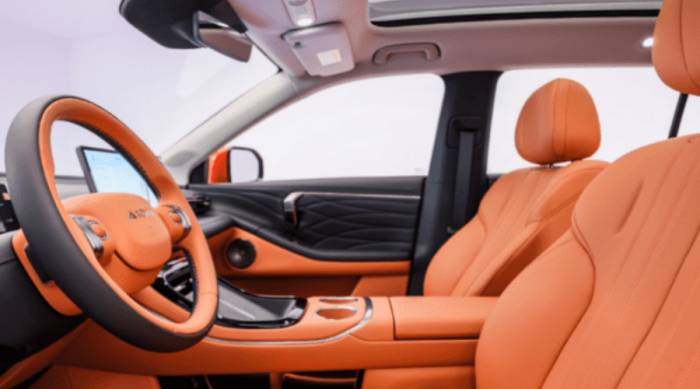
Open the door. The first thing you notice isn't a specific button or screen—it's the sense of airiness. The greenhouse is massive, with thin pillars and a commanding view. Then your eyes land on the dashboard. It's clean, almost minimalist for a vehicle this size, but not sterile.
The Dual-Screen Setup: You've got a digital instrument cluster and a large central touchscreen. They're housed under what appears to be a single, curved pane of glass, which eliminates the clunky bezels you see in many rivals. It looks premium, straight out of a high-end EV.
The Center Console: This is where the G318 asserts its personality. Instead of a cramped, button-filled tunnel, it's wide, open, and features a prominent, chunky rotary gear selector. Flanking it are physical controls for drive modes and the 4WD system—crucial for quick access when the terrain changes. I appreciate this. Burying your differential lock controls three menus deep in a touchscreen while you're crawling over rocks is a terrible idea.
Sightlines & Ergonomics: The hood is visible, giving you confidence off-road. All major controls fall easily to hand. It feels designed for someone who will actually use the vehicle's capabilities, not just admire them from a showroom.
Materials & Touchpoints: The Feel Factor
This is where Deepal makes its stand. Run your hand across the top of the dashboard. It's soft-touch, textured material, not hard plastic. The door armrests are padded and stitched. On the higher trims, you'll find genuine leather (or a very convincing vegan alternative) on the seats and steering wheel, with tasteful contrasting stitching.
But here's the non-consensus bit everyone misses: they've cleverly zoned the materials. Lower down on the doors and the center console sides, where boots and gear will scuff, they use a more durable, rubberized texture. It's still pleasant to the touch and easy to clean, but it's tougher. It's a practical choice that doesn't sacrifice the overall aesthetic. You don't get the jarring switch from leather to cheap plastic like in some trucks.
Where They Could Do Better
Not everything is perfect. The glossy black plastic around the gear selector and some AC controls is a fingerprint magnet. After a day, it looks messy. I wish they'd used the same matte metallic or wood trim found elsewhere. Also, while the primary buttons have a solid click, some of the secondary rocker switches for things like mirror adjustment feel a bit light, not as substantial as the rest of the cabin.
Seating & Space: Family-First Design
The G318 is built on a dedicated extended-range EV platform, and the interior packaging benefits hugely. There's no massive transmission tunnel eating into floor space. The result is a flat, open floor, especially in the rear.
Front Seats: They're wide, supportive, and offer a good range of electrical adjustment (on higher specs). The bolstering is just right—enough to hold you in place on a twisty trail without feeling like you're in a racing bucket seat for your school run.
The Second Row: This is the sweet spot. Legroom is enormous. I'm 6'2", and with the driver's seat set for me, I could sit behind myself with knees nowhere near the seatback. The seatbacks recline, and the bench itself can slide forward and back. The outboard seats are heated, and there are climate vents and USB-C ports for everyone.
The Third Row: Let's be real. In most mid-size SUVs, the third row is for small children or groceries. The G318's is... actually usable for medium-length journeys for average-sized adults. The key is the second-row slide function. With it moved forward a notch, a 5'8" passenger can fit back there without their knees in their chin. Headroom is tight, but it exists. It's a proper 7-seater, not a 5+2.
Tech & Infotainment: The Digital Nerve Center
The central infotainment system is fast, responsive, and runs on a slick UI. Graphics are sharp. Wireless Apple CarPlay and Android Auto connect seamlessly. The voice assistant is surprisingly good for basic climate and navigation commands.
But the party trick is the integration with the vehicle's adventure features. The screen can display a transparent 360-degree camera view, which is witchcraft when picking a line through rocky terrain. You can see exactly where your wheels are relative to that big rock. The off-road pages show real-time data on pitch, roll, tire pressures, and which differentials are locked. This isn't just for show; it's vital information when you're pushing the vehicle's limits.
One gripe: while the main screen is great, the digital instrument cluster, while customizable, feels a bit less graphically rich in comparison. The information is all there, but it doesn't have the same "wow" factor.
Storage & Practical Magic
This is where the G318's interior truly shines for real life. It's full of "oh, that's clever" moments.
The Frunk (Front Trunk): Since it's an EREV, there's an extra storage compartment under the hood. It's not huge, but it's perfect for storing charging cables, a first-aid kit, or muddy hiking boots you don't want inside the cabin. It's lockable and waterproof.
Center Console Cavity: It's deep. I mean, "large handbag or small drone case" deep. Plus, it has a sliding tray organizer on top for phones and wallets.
Door Pockets: They're massive. The front ones easily hold a 1-liter water bottle and other clutter. The rears are almost as big.
Underfloor Storage: In the very back, beneath the removable cargo floor, there's a hidden, partitioned compartment. Ideal for tools, recovery gear, or keeping valuables out of sight.
The cargo area with all seats up is decent for a few backpacks. Fold the third row flat, and you have a huge, square space. Fold the second row, and it's essentially a small van. The load lip is low, making loading heavy items easier.
The Real-World Test: Daily & Adventure Use
Let's put it in two scenarios I actually tested.
Scenario 1: The Saturday Family Errand Run. Two kids, sports gear, a grocery stop. The flat floor meant no fighting over foot space. The massive door pockets swallowed their drinks and snacks. The easy-clean rear seat materials survived a spilled smoothie with a quick wipe. The quiet, refined cabin (thanks to the electric drive in city mode) made the trip calm, not chaotic. The rear passengers had their own climate zone to stop the "I'm too hot!" arguments.
Scenario 2: A Muddy Weekend Camping. Four adults, gear for two nights. The frunk held the muddy boots after the hike. The partitioned underfloor storage kept the clean sleeping bags separate from the wet tarp and recovery straps. Wiping down the durable lower door trims and rubberized mats was a two-minute job. Sitting inside after a day in the elements, the heated seats and panoramic view made it feel like a cozy base camp, not a dirty truck.
The cabin works because it doesn't force you to choose between luxury and utility. It provides both in different areas.
Your Deepal G318 Interior Questions Answered
Walking away from the Deepal G318, the interior is what sticks with you. It's not an afterthought; it's the core experience. It successfully bridges a gap that few vehicles even attempt: providing the tactile luxury and daily comfort of a premium family SUV with the practical, durable, and functional mindset of a true overlanding tool. It makes the case that you don't have to suffer with a Spartan cabin to have an adventure, and you don't have to baby a delicate interior to live an active life. For the modern family that sees the vehicle as both a sanctuary and a launchpad, the G318's cabin might just be its most compelling argument.