Let's cut to the chase. You're looking at two iconic American nameplates, both under the General Motors umbrella, and you're trying to figure out which one deserves your money. Is it the quietly confident Buick, promising premium comfort without the flash? Or the bold, technology-forward Cadillac, declaring its luxury status for all to see? This isn't just about badges; it's about two fundamentally different approaches to what a "nice car" should be.
After years of driving both brands' latest models, from the serene Buick Enclave to the sharp Cadillac XT6, I've realized the choice boils down to a simple but profound question: Do you want to be coddled in near-silent comfort, or do you want to feel engaged and assertive on the road? Buick masters the art of the "near-luxury" sanctuary. Cadillac is unapologetically in the ring with Mercedes and BMW. Getting this wrong means you could spend years in a car that subtly grates against your personality.
Your Quick Navigation Guide
The Core Divide: Brand History & Positioning
Understanding where these brands come from explains everything about where they are today.
Buick's path has been one of elegant reinvention. Once a top-tier luxury marque, it strategically moved downmarket to occupy a lucrative and often misunderstood niche: "Premium" or "Near-Luxury." This isn't a downgrade; it's a specific strategy. Buick targets buyers who want the smooth, quiet, and spacious feel of a luxury vehicle but are either price-conscious or simply dislike the ostentation of traditional luxury badges. Their average buyer is older, values comfort above all, and sees a car as a peaceful retreat. In China, Buick is a full-fledged luxury status symbol, which funnels global resources back into the brand.
Cadillac's mission is crystal clear: compete directly with the German and Japanese luxury elite. The "Standard of the World" tagline isn't just history; it's a current mandate. Every Cadillac, from the CT5 sedan to the Lyriq EV, is engineered with dynamics, technology, and materials aimed at stealing customers from Audi, BMW, and Lexus. Their design language is angular and bold ("Art and Science"), their marketing focuses on performance, and their buyer seeks recognition and driving engagement.
Where You Sit: Design & Comfort Showdown
This is where the philosophies become tangible. Sit in both, and the difference is immediate.
Interior Quality & Seat Comfort
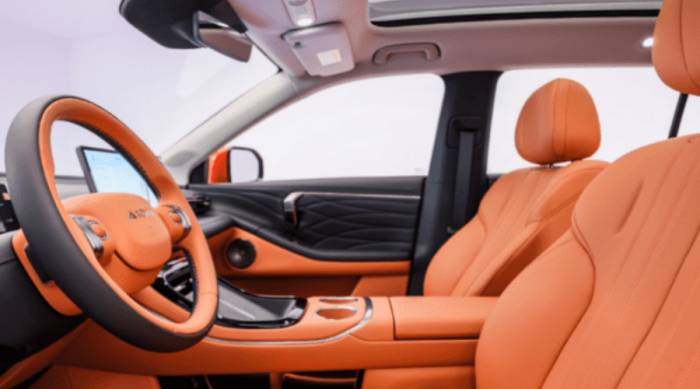
Slip into a top-trim Buick Envision or Enclave. The first thing you notice is the lack of noise. Then, you sink into the seats. Buick seats are famously soft, almost like a well-break-in leather armchair. The materials are good—soft-touch plastics, convincing faux wood or metal trim—but the goal isn't to dazzle you with exotic leathers. It's to create a sense of serene, effortless comfort. The cabin layout is conservative, intuitive, and focused on ease of use.
Now, get into a Cadillac XT5 or CT5. The seats are firmer, more bolstered, designed to hold you in place during spirited driving. The materials aim higher: more real metal, available carbon fiber, finer-grain leathers (often branded as Opus or Semi-Aniline). The design is driver-centric, with everything angled toward you. It feels more special, more crafted, but it can also feel busier. Some of Cadillac's earlier CUE systems used piano black plastic that was a fingerprint and scratch magnet—a classic case of form over function they've since improved.
Noise, Vibration, and Harshness (NVH)
This is Buick's secret weapon and an area where they often outperform base-model Cadillacs. Buick pours engineering into acoustic laminated glass, active noise cancellation (QuietTuning), and isolating suspension bushings. On the highway, a Buick can be library-quiet. It's profoundly relaxing.
Cadillac is quiet too, but the character is different. You hear less road noise, but you might hear more of the engine's purposeful note, especially in V-Series or turbocharged models. The focus is on refining the sounds you do hear, not eliminating them entirely. A Cadillac's silence feels more like a technical achievement; a Buick's feels like a inherent trait.
How They Drive: Performance & Driving Experience
If the interior tells one story, the driver's seat tells another.
Buick's driving mantra is isolation. The steering is light and effortless. The suspension, especially on models with the optional HiPer Strut or continuous damping control, glides over imperfections. The goal is to separate you from the hassles of the road. You arrive unstressed. The trade-off? You feel disconnected from the driving experience. Pushing a Buick Enclave around a bend reveals noticeable body roll—it's not meant for that. The powertrains (often turbocharged 2.0L or a smooth V6) are tuned for seamless, quiet power delivery, not neck-snapping thrust.
Cadillac is built for connection. Even their SUVs, like the XT6, have tighter steering and firmer suspension tuning (often with Magnetic Ride Control). You feel the road surface more, but in a refined way. The chassis communicates. Turn-in is sharper. The powertrains, from the turbocharged 2.0L to the beastly Blackwing V8s, are tuned for responsiveness. There's a sense of athleticism, even in a three-row SUV. The trade-off? On rough city streets, you might find yourself wishing for Buick's magic carpet ride.
| Aspect | Buick (e.g., Enclave Avenir) | Cadillac (e.g., XT6 Sport) |
|---|---|---|
| Primary Goal | Passenger Comfort & Serenity | Driver Engagement & Presence |
| Steering Feel | Light, Effortless, Isolated | Weightier, Direct, Communicative |
| Ride Quality | Plush, Cloud-like, Excellent Isolation | Firm, Controlled, "Taut" |
| Powertrain Character | Smooth, Quiet, Linear Delivery | Responsive, Eager, More Audible |
| Best For | Long Highway Trips, Stress-Free Commuting | Engaging Drives, Confident Cornering |
Tech & Infotainment: Quiet Refinement vs. Cutting Edge
Both brands use GM's excellent underlying tech, but the presentation and priority differ.
Buick's infotainment system is straightforward. It's usually an 8-inch or 10-inch screen running a user-friendly version of GM's software. Physical buttons for climate control are often retained—a blessing for usability while driving. The technology serves the comfort mission: great Bose sound systems for music, a fantastic rear camera mirror, and quiet-tuning tech are headline features.
Cadillac pushes the envelope. They debuted the massive 33-inch curved OLED display, a stunning piece of tech that sets a new bar for in-car screens. Their Super Cruise hands-free driver assistance system is widely considered one of the best, if not the best, in the world for highway driving. The tech here is a selling point in itself, meant to wow you and compete with the latest from Audi's Virtual Cockpit or Mercedes' Hyperscreen.
A subtle but important point: Buick often gets proven, reliable tech a model year after Cadillac debuts it. This means fewer early-adopter glitches.
The Bottom Line: Price & Ownership Costs
Let's talk numbers, because this is where the "near-luxury" positioning pays dividends.
Sticker Price: A comparably equipped Buick will typically be $5,000 to $12,000 less than its Cadillac counterpart. A fully-loaded Buick Enclave Avenir tops out around $60,000. A similarly equipped Cadillac XT6 Premium Luxury or Sport easily crosses $70,000. That's a significant gap for interiors and driving experiences that, while different, are in the same ballpark of quality.
Depreciation: This is a complex one. Historically, Cadillacs depreciated heavily. In recent years, their stronger brand push and desirability have improved resale values, but they can still lose value faster than a Lexus. Buicks, perhaps due to lower starting prices and a reputation for reliability, often have slightly gentler depreciation curves. Always check specific models on sites like Kelley Blue Book for the latest data.
Reliability & Running Costs: Both brands share GM parts bins, so mechanical reliability is often similar. According to long-term data from sources like Consumer Reports, Buick consistently ranks among the top American brands for reliability. Cadillac's scores have improved but can be pulled down by the complexity of their newest technology suites. Insurance and maintenance costs are generally higher for Cadillac due to its luxury classification and more expensive parts.